
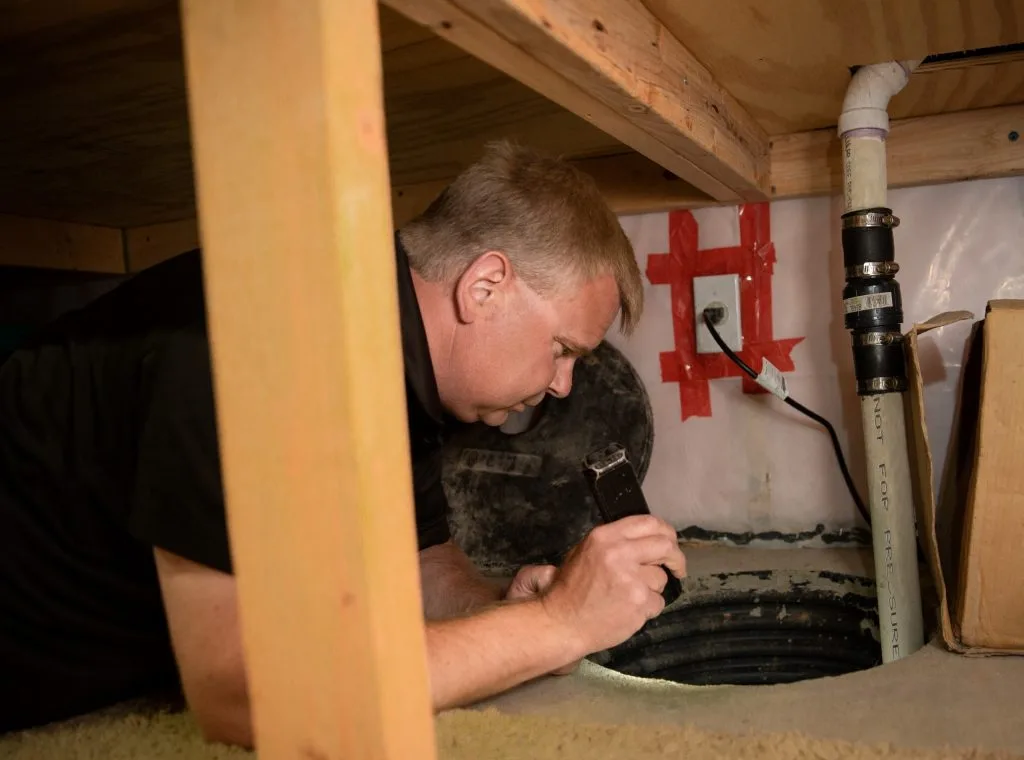
A condo inspection is not a smaller version of a house inspection. It is a different job with a different boundary, and the boundary is the thing buyers get wrong. Your money is at risk on both sides of it — inside the unit, where what we find is yours to fix, and outside it, where what the building has deferred arrives later as a special assessment.
Chicago Home Inspect LLC inspects condominium units across Chicago and the north, northwest, and west suburbs — vintage two- and three-flat conversions, courtyard buildings, mid-century mid-rises, and high-rises. The building type changes what is accessible and what tends to fail, and it changes what we can honestly tell you.
What we inspect in a condo, and what belongs to the association
The Illinois Standards of Practice govern what a home inspector reports on. In a condominium that lines up closely with the declaration: we inspect the systems and components serving your unit, and we report on common elements only where they are readily accessible and visible from your unit or from common areas we can reach.
Inside your unit — inspected in full:
- The unit’s electrical panel or subpanel, receptacles, switches, GFCI and AFCI protection
- In-unit heating and cooling — furnace and condenser, fan coil, PTAC, or electric baseboard — including combustion air and flue routing where the equipment is yours
- Water heater, if it is in the unit, and its temperature-pressure relief discharge
- Supply and drain plumbing within the unit, fixtures, and every accessible shutoff
- Kitchen and bath ventilation, and where the fans actually terminate
- Windows and their perimeters, doors, floors, walls, ceilings
- Built-in appliances
- Smoke and carbon monoxide alarms against current Illinois placement requirements
- Any private balcony, deck, or rear porch section serving your unit
Common elements — observed and reported, not our repair to assign: the roof, masonry and tuckpointing, the rear porch structure, common stairwells, the boiler or chiller in a shared system, the parking structure, the water service, and the sewer. When we can see a defect in one of these, it goes in the report with photographs, because it is going to reach you eventually through your assessments. But the association owns the repair, and we say so plainly rather than writing it up as if it were your line item.
This is the single most useful thing an inspection does for a condo buyer: it separates the repairs you will pay for directly from the ones you will pay for through the association.
Vintage conversions: the Chicago condo problem
A large share of Chicago’s condominium stock is not purpose-built. It is a two-flat, three-flat, or courtyard walk-up that was converted, most heavily in the late 1990s and 2000s. Conversions are where we find the most consequential defects, and they cluster in predictable places.
Work done without permits
Converting a flat into separate units means new walls, new bathrooms, relocated kitchens, and separated mechanicals. A lot of that work was permitted. A meaningful amount was not. Unpermitted work is not automatically dangerous, but it was never inspected by anyone, so it has to be treated as unverified until we look at it ourselves.
Mechanical separation
When one boiler became four furnaces, somebody had to route four flues and find combustion air for each. In converted buildings we regularly find a high-efficiency furnace sharing a chase it should not, a water heater orphaned on an oversized flue after the furnace beside it was replaced, or a furnace closet with no combustion air path at all. A single-pipe Category IV furnace in a closet with louvered doors is fine. The same furnace behind solid doors with no transfer opening is not.
Laundry added inside the unit
In-unit laundry is a selling point and, in a conversion, often an afterthought. The recurring findings are a dryer vented into a joist bay or a common chase instead of outdoors, a washer standpipe that is too short or unvented, and no pan or floor drain above finished space belonging to a neighbor.
Electrical in a Chicago condo
Chicago writes its own electrical code — Title 14E of the Municipal Code, currently based on the 2017 NEC — and it differs from the suburbs in ways that matter here.
Wiring in Chicago runs in metal conduit. In an older building you will often see two conductors of cloth-insulated wire in that conduit and no separate green ground. That is not an ungrounded system. The conduit itself is the equipment grounding path, and it is a legitimate one. What we check is whether it is continuous and properly bonded, because a section of flexible connector or a rusted coupling can break the path without anything looking wrong at the outlet.
Other recurring items in unit panels: subpanels with the neutrals and grounds still bonded together, double-tapped breakers, and panels installed in a bedroom closet — which Title 14E-2-240 does not permit in a clothes closet, and which conversions produced constantly because a closet was the only wall left.
Water, and which direction it came from
Nearly every condo water stain resolves to one of three sources, and the source determines who pays.
- From above, inside the building — a neighbor’s supply line, a failed wax ring, an overflowing tub. Usually the responsible unit owner’s problem, and usually the fastest to prove because the staining is directly beneath the fixture.
- From outside, through the envelope — failed tuckpointing, a window perimeter that has lost its seal, a parapet or roof edge on a top-floor unit. This is a common element, and it is the one that becomes a special assessment.
- Below grade — garden and lower-level units, where the water comes through the foundation wall or up a floor drain. Grading, downspout discharge, and the condition of any ejector or sump pit all matter, and half of that is outside your unit.
We run a moisture meter on anything suspicious rather than guessing from the appearance of a stain, and we photograph the ceiling and wall planes of top-floor units carefully, because envelope leaks in a mid-rise are slow, seasonal, and easy to paint over before a showing.
Rear porches and balconies
Chicago’s wood rear-porch systems are their own category. On a condo they are almost always a common element, so a defect is the association’s to correct, but you still need it in writing before you close — porch replacement is one of the largest assessments a small association will ever levy.
We look at ledger attachment and flashing, post bearing and base condition, stair stringers and rise consistency, and guard height. On multi-family porches and balconies in Chicago the guard requirement is 42 inches, not the 36 inches that applies to a single-family deck, and a rebuilt porch that used the residential number is a finding.
High-rise and mid-rise units
In a high-rise, most of the building is unavailable to us: no attic, no crawlspace, no roof access, no access to the mechanical penthouse. That is a real limitation and we state it in the report rather than implying coverage we do not have.
What we can do thoroughly is the unit itself — the fan coil or PTAC and its condensate path, the electric panel, the plumbing, window and slider operation and perimeter sealing, and the condition of the finishes. In stacked plumbing, we look for evidence of previous riser work in the wall behind the fixtures, because riser replacement is a building-wide project with a building-wide price tag.
Radon and mold in condominium units
Radon is not just a single-family concern. Ground-contact units — garden units, lower-level units, first floors over a slab or crawl — can and do test above the EPA action level of 4.0 pCi/L. We are licensed by the Illinois Emergency Management Agency for radon measurement and place the test the same day as the inspection, under the closed-building conditions the protocol requires.
Mold testing is also performed in-house rather than referred out. In condos the usual trigger is a below-grade unit, a bathroom fan that terminates in a chase, or staining from one of the three water paths above. We are not a remediation company, so there is nothing for us to sell you on the back of a positive result.
The documents matter as much as the unit
An inspection tells you about the physical condition of what you are buying. It cannot tell you whether the association can afford to fix the building. Under Section 22.1 of the Illinois Condominium Property Act, the seller is required to obtain and provide, on request, the association’s financial statements, its reserve information, and a statement of any capital expenditures the association anticipates in the current or next two fiscal years.
Ask for all of it, and read the last two years of board meeting minutes alongside our report. If we photograph open masonry joints on the north elevation and the minutes show a tuckpointing bid the board has been deferring for three years, those two documents together are telling you what your assessment is about to do.
What a condo inspection costs
Condo inspections are priced by square footage like any other inspection, and a unit is quoted at booking. Radon measurement and mold testing are separate add-ons, and thermal imaging is included at no charge on every inspection we perform. Our full pricing breakdown is in the Chicago home inspection cost guide.
Where we inspect condominiums
We cover Chicago and the north, northwest, and west suburbs — Cook, Lake, McHenry, and DuPage counties — with weekend availability. Condo inspections are available everywhere we work, including Lincoln Park, Lake View, Logan Square, Wicker Park, Roscoe Village, Ravenswood, Lincoln Square, Andersonville, Edgewater, Rogers Park, Jefferson Park, the West Loop, Evanston, Skokie, Niles, Park Ridge, Des Plaines, Glenview, Arlington Heights, Mount Prospect, Palatine, Wilmette, Northbrook, and Highland Park.
Common questions
Do I really need an inspection if the association maintains the building?
The association maintains the building. Nobody maintains the inside of your unit, and that is where the furnace, the panel, the plumbing, and the appliances are. It is also the only opportunity you get to have the common elements looked at by someone working for you rather than for the seller or the board.
Will you inspect the roof and the exterior?
We report on them from every vantage point we can reach, with photographs, and we tell you what we could not see. What we do not do is write common-element defects up as your repair list — they belong to the association, and the report says so.
Can you inspect the building’s boiler?
If the mechanical room is accessible during the inspection, yes, as a common element. In many buildings it is locked and the management company will not open it on an hour’s notice. Ask your agent to arrange access ahead of time if the building has a shared heating plant — it is worth the phone call.
Is a new-construction condo worth inspecting?
Yes, and developer units are where we find some of the most obvious defects — unconnected bath fans, missing GFCI protection, condensate lines run uphill, and appliances that were never commissioned. A building being new means nobody has lived there long enough to discover what is wrong.
How long does a condo inspection take?
Most units take one to two hours, plus the common areas we can access. You are welcome to attend, and for a first-time buyer we recommend it — an hour walking the unit with the inspector is worth more than the report on its own.
Schedule a Chicago condo inspection
If you are under contract on a condominium and working against an attorney review deadline, say so when you book — we schedule around Illinois attorney review and inspection periods routinely, and reports go out the next business day.