
This page covers what we actually do, and what each type of inspection is scoped to include. If you are looking for who we are and why to hire us, that is on the home page. If you want to know what the finished product looks like before you book, look at a real sample report.
Chicago Home Inspect LLC is an Illinois-licensed home inspection company working in Chicago and the surrounding suburbs. Every inspection follows the Illinois Home Inspector Standards of Practice (68 Ill. Adm. Code 1410), which sets the legal floor for what an inspection must cover. Most of what follows goes past that floor, because the housing stock here demands it.
What a standard inspection covers
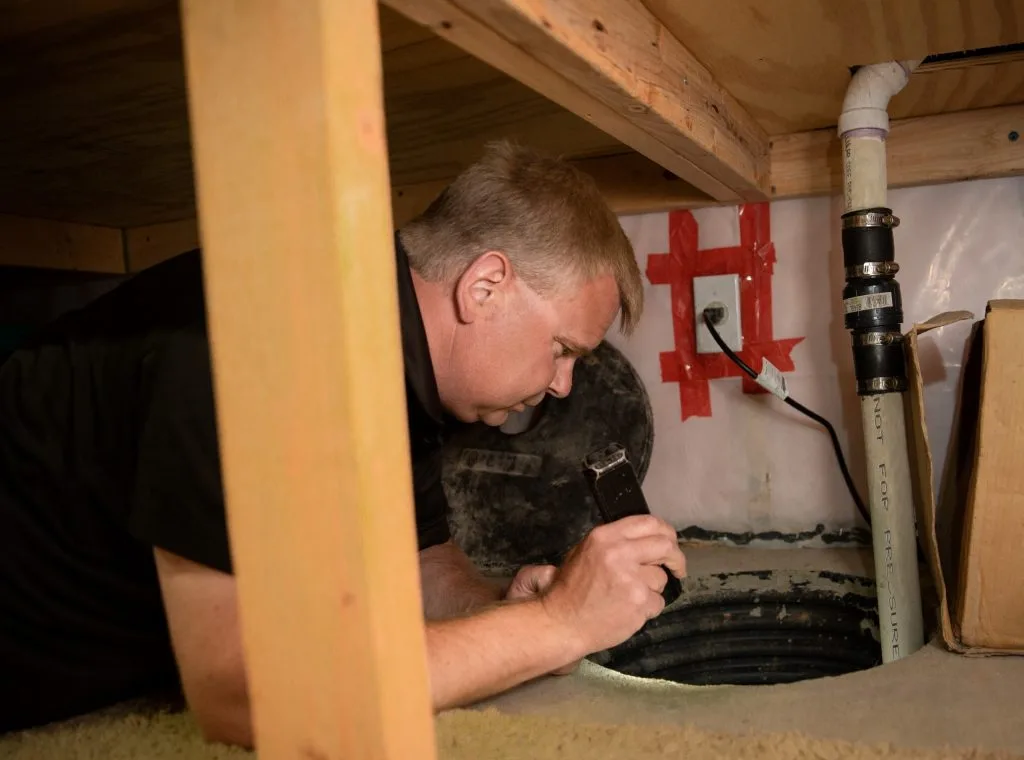
A home inspection is a visual, non-invasive examination of the readily accessible systems and components of a building on the day of the inspection. We do not open walls, lift carpet, or dismantle equipment. Within that limit, here is what gets examined:
- Structure — foundation walls, visible framing, floor and roof structure, basement and crawl space conditions, evidence of movement or water entry
- Roof and drainage — covering, flashing, chimneys, gutters and downspouts, and where the water goes once it leaves the roof
- Exterior — masonry and tuckpointing, siding, trim, windows and doors, porches, decks, stairs, guardrails, grading, and walkways
- Electrical — service entrance and capacity, panel and overcurrent protection, branch wiring methods, GFCI and AFCI protection, and visible device condition
- Plumbing — supply piping and material, drain and vent piping, water heater installation and venting, fixtures, and functional flow and drainage
- Heating and cooling — equipment operation and age, venting and combustion air, distribution, and condensate handling
- Interior — walls, ceilings, floors, stairs, windows, doors, and installed appliances
- Attic and insulation — insulation depth, ventilation, and any bath or dryer exhaust terminating where it should not
- Garage — structure, fire separation, and overhead door safety reversal
- Thermal imaging — a thermal camera is part of every inspection at no additional charge, not a paid add-on. It reads surface temperature differences, which is how missing insulation, active moisture, and some electrical and plumbing problems announce themselves before anything is visible. It does not see through walls, but it routinely finds what a visual scan alone would walk past.
An inspection typically takes two to four hours depending on size and age. You are welcome to attend, and it is worth doing — walking the building with the inspector will teach you more in an hour than the report can in ten pages. Reports are delivered digitally, with photos, within 24 to 48 hours.
Chicago-specific conditions we look for
Generic checklists miss what actually fails in this market. A few examples of what local experience changes:
- Conduit-grounded wiring. Pre-1950 Chicago buildings commonly have cloth-insulated two-conductor wiring run in metal conduit, where the conduit itself is the equipment ground. That is a legitimate grounding means here, not an ungrounded system — and inspectors from outside the city routinely call it wrong, which costs sellers real money in unnecessary negotiation.
- Chicago’s own electrical code. The city does not use the NEC directly. It uses Title 14E of the Municipal Code, which is NEC-based but diverges in ways that matter at inspection.
- Guardrail height. Chicago requires 42 inches on porches and balconies, not the 36 inches the IRC allows. On a three-flat back porch this is the single most common safety finding.
- Freeze-thaw and masonry. Spalled brick, failed mortar joints, and lintel rust are a seasonal certainty on older masonry buildings here, and they are the leading path for water into a wall assembly.
- Below-grade finished space. Garden units and finished basements hide the moisture history of the building. Grading, downspout discharge, and window well drainage tell you more than the drywall does.
- Sewer laterals. Clay tile and cast iron under mature parkway trees is the standard Chicago condition. A visual plumbing inspection cannot see any of it — see sewer scope below.
Types of inspection we perform
Buyer’s pre-purchase inspection
The standard inspection above, performed during your attorney review or inspection contingency period. This is the majority of our work. We work for the buyer who hired us — not the seller, not the listing agent, and not the agent who referred us. The report is written to support a real negotiation, which means findings are specific enough for a contractor to price.
If the seller has already had the property inspected, get your own anyway. A seller’s report was commissioned by someone whose interests run opposite to yours, and it is under no obligation to be complete. Our full guide to pre-purchase inspections for Chicago buyers covers cost, timing, and what happens after the report.
Seller’s pre-listing inspection
The same scope, run before the property goes on the market, with the findings going to you instead of to a buyer’s negotiating position. The value is timing and control: you decide what to repair, what to disclose, and what to price in, on your schedule rather than during a five-day contingency window with a closing date attached.
You are not obligated to repair everything found. Many sellers fix the safety items, disclose the rest, and price accordingly — which is generally cheaper than conceding to a buyer’s inspector’s version of the same list under deadline. Sharing the report with buyers is optional and entirely your call.
New construction and pre-drywall
New does not mean correct. A pre-drywall inspection looks at framing, structural connections, and rough mechanical, electrical, and plumbing while all of it is still visible — the only point at which most of it will ever be visible. A final pre-closing inspection covers the completed house. Builder punch lists are not inspections, and the municipal inspector is checking code compliance, not your interests.
Condominium and multi-unit
Condo inspections are scoped to the unit and the systems serving it. Roof, exterior envelope, and shared mechanicals are common elements under the association’s control and fall outside the scope of a unit inspection — though we will tell you what we can see of them, because a special assessment is a real cost of ownership.
Two-flats, three-flats, and four-flats are inspected as whole buildings. Conversions are the thing to watch: added kitchens, basement units, and rear-porch enclosures done without permits are common, and they carry consequences at closing and at insurance renewal.
What we inspect inside a unit, what belongs to the association, and the defects that turn up in vintage conversions are set out in full on our Chicago condo inspection page.
Annual and maintenance inspections
For owners who are not transacting. The same walkthrough, done to catch the cheap version of a problem before it becomes the expensive one — a failing water heater relief valve, a downspout dumping against a foundation, a furnace approaching the end of its service life. Most valuable on older buildings and on properties you rent out.
Relocation inspections
Condition reports for relocation management companies and corporate transfers, written to the format the relocation company requires.
Add-on testing performed in-house
These are scheduled with your inspection and performed the same day. We do not refer them out, and we do not perform remediation of any kind — we have no financial interest in what the results say.
- Radon testing — IEMA-licensed, using continuous radon monitors rather than charcoal kits, so you get hourly data instead of a single averaged number. 48-hour minimum test under closed-house conditions.
- Mold testing — air sampling with an outdoor control, and surface sampling where there is visible growth. Accredited lab results in 48 to 72 hours.
- Sewer scope — camera inspection of the main lateral from the building to the city connection. The only way to see the condition of a line that a standard inspection cannot evaluate at all.
What an inspection does not include
Being clear about the limits is part of the job:
- It is visual and non-invasive. Concealed conditions inside walls, under floors, and beneath the ground are outside the scope.
- It describes the building on the day of the inspection. It is not a warranty, a guarantee, or a prediction of remaining life.
- We do not perform code enforcement inspections or issue code compliance certificates. Where we reference a code requirement, it is to explain why a condition matters.
- Inaccessible areas — a full crawl space, a snow-covered roof, a locked mechanical room, a storage-packed attic — are reported as not inspected rather than assumed acceptable.
- We do not quote or perform repairs, and we do not accept referral fees from contractors.
Service areas
We inspect throughout Chicago and the surrounding suburbs. The pages below are a sample of where we work most often. They are not a service-area boundary. If your neighborhood or suburb is not listed here, that does not mean we do not service them.
Chicago neighborhoods
- Andersonville
- Edgewater
- Jefferson Park
- Lake View
- Lincoln Park
- Lincoln Square
- Logan Square
- Ravenswood
- Rogers Park
- Roscoe Village
- West Loop
- Wicker Park
Suburbs
- Arlington Heights
- Buffalo Grove
- Crystal Lake
- Des Plaines
- Evanston
- Glenview
- Highland Park
- Lake Zurich
- Libertyville
- Mount Prospect
- Mundelein
- Niles
- Northbrook
- Palatine
- Park Ridge
- Schaumburg
- Skokie
- Vernon Hills
- Wilmette
We regularly inspect well beyond the areas listed above, throughout Cook County and the surrounding collar counties. Call with an address and we will tell you straight away whether we cover it.
Common questions
Should I attend the inspection?
Yes, if you can. You do not need to be there for the whole thing, but the last hour is worth showing up for — that is when we can walk you through what was found and what actually matters. What to expect on inspection day.
How fast can you get out?
Most inspections are scheduled as soon as the following day, including weekends. Tight closing timelines are normal here and we work around them.
How quickly do I get the report?
Within one business day of the inspection. It is a digital report with photos, plain-English explanations of what was found, and a summary of the items that actually matter — not a checklist you have to decode. If you are working against an attorney review deadline, say so when you book and we will work to it. See a sample report.
Is a pre-listing inspection the same as a buyer’s inspection?
The scope is identical. The difference is who receives the information and when — which is the entire point of doing it.
Do I need a sewer scope on a condo?
Usually not, since the lateral is a common element. On a single-family home or a small multi-unit building in an older Chicago neighborhood, it is the add-on with the highest chance of finding something expensive.
Do you inspect new construction?
Yes — both pre-drywall and final pre-closing. New construction produces defects at a rate that surprises most buyers.
Schedule an inspection
Booking takes about two minutes. If you are not sure which type of inspection or which add-ons apply to your property, describe the building in the booking notes — we will confirm what makes sense before the appointment.