
Park Ridge is an older, established suburb that has been steadily rebuilding itself. Much of the housing dates from the 1920s through the 1950s, a good deal of it well built, and alongside it sits a continuous stream of teardown rebuilds and large additions. The result is a village where two houses on the same block can be eighty years apart, and where the inspection has to start by establishing what you are actually looking at.
Book your Park Ridge home inspection — pick a time online in about two minutes. Weekend inspections available.
We are a licensed Illinois home inspection entity (License 451.001520). Every inspection includes thermal imaging at no additional charge, and your full photo report arrives within one business day.
The older stock
The pre-war and early post-war housing here is generally solid, and the questions are about what survived and what was changed. Plaster over lath, solid or veneer masonry with decades of freeze-thaw behind it, galvanized supply piping corroding closed from the inside, cast iron drains channelling along the bottom, and knob-and-tube still possible in attics that were never opened up. Slate and clay tile roofs appear on the older houses and fail at the flashings long before the material itself gives out.
Additions and rebuilds: what changed, and was it done properly
Park Ridge has a great deal of second-storey addition and gut-rehab work, and this is where an inspection earns its money. We look for bearing walls opened without a beam sized for the load, additions framed off existing rafters that were not designed to carry them, bathrooms added over notched or drilled joists, and mechanical systems left serving a house twice the size they were specified for — an original furnace heating a newly doubled floor area is a common and expensive finding.
Where the work is recent and complete, thermal imaging shows what the finishes hide: skipped insulation behind new drywall, and wet walls that look perfect.
Water, and a real backup history
Park Ridge has had significant stormwater and basement backup problems, and the village has invested heavily in sewer and detention work as a result. That history is directly relevant to any house you look at here.
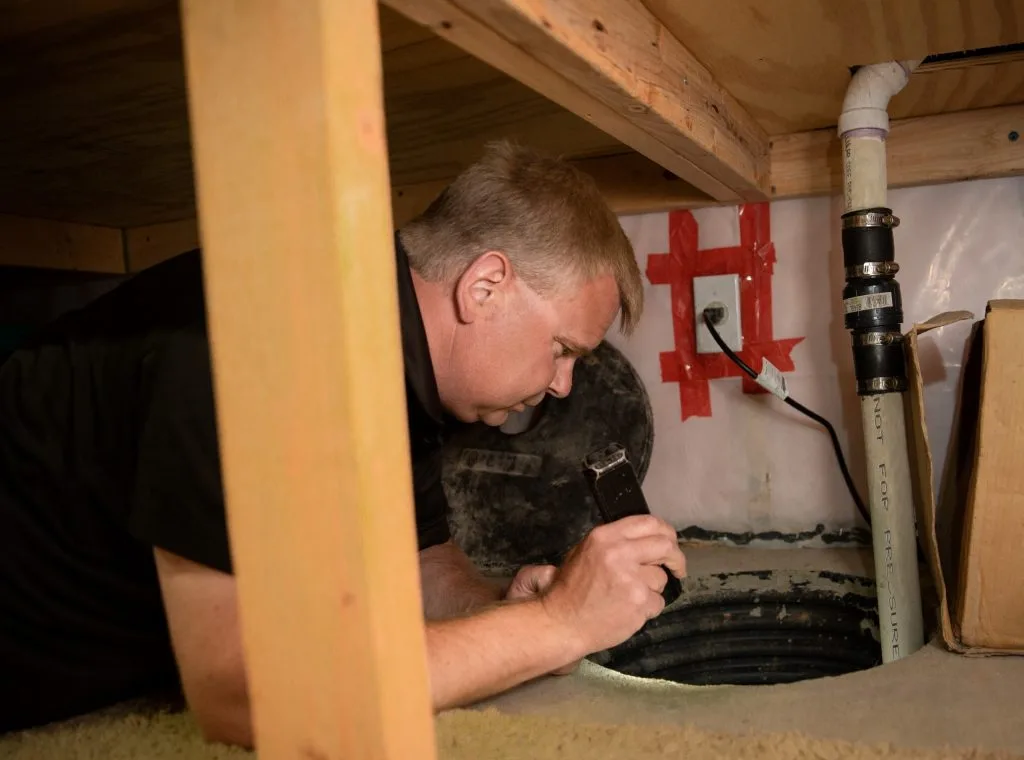
We check for the evidence of a house that flooded and was fixed — an overhead sewer conversion or a backwater valve, whether that valve is accessible for the servicing it requires, whether the ejector pit is sealed and vented, whether the sump cycles and where it discharges. And then the ordinary causes that account for most wet basements anywhere: downspouts ending at the foundation, grading that has settled back over decades, and window wells with no drainage.
Aircraft noise and the sound insulation program
Park Ridge sits near O’Hare, and homes in the affected areas were eligible for the airport’s residential sound insulation program, which installed replacement windows and in many cases added central air conditioning. If the windows and the air conditioner are noticeably newer than everything else in the house, that is usually the explanation. It is worth knowing which components came from the program and which are original, because it changes the remaining-life picture on two of the more expensive systems in the building.
Radon and sewer
Radon is common across northern Illinois and worth testing in any house with a sump pit or finished lower level. We are IEMA-licensed and use continuous monitors rather than charcoal kits, so a borderline result comes with hourly data you can actually negotiate on rather than a single averaged number.
Sewer laterals in housing this old are frequently clay tile, and Park Ridge’s mature parkway trees have had generations to find the joints. Combined with the area’s backup history, a scope is among the most useful things you can add here.
Common questions
The house was gut rehabbed. Is there less to inspect?
Usually more to think about, not less. A rehab replaces finishes and often mechanicals, but it also introduces structural changes that may or may not have been engineered and permitted. New drywall hides the answer.
How do I find out if the basement has flooded?
The house usually tells you. Staining at the base of the walls, efflorescence, rusted mechanical feet, replaced bottom plates on finished walls, a newer backwater valve on an old floor drain. We look for the evidence that outlasts the water, since a dry basement in a dry month proves very little.
Can you inspect on a weekend?
Yes. We do not schedule evenings.
What the inspection does not include
A home inspection is a visual, non-invasive evaluation of the systems accessible on the day of the inspection. We do not open walls, move stored belongings, dismantle equipment, or predict how long a component will last. We do not inspect septic systems or test well water, and we do not perform the structural engineering analysis some findings call for. A sewer scope needs an accessible cleanout; standing water or an inaccessible line limits what the camera can show.
We also do not perform repairs, sell remediation, or take referral fees. We measure and interpret; you decide what to do about it. The company scoping your sewer line should not also be the company quoting the repair.
What the inspection covers: every inspection we perform in Park Ridge follows the same scope. See our home inspection services and what each one covers — pre-purchase, pre-listing, new construction, condo and multi-unit — plus in-house radon, mold, and sewer scope testing.
Nearby areas we inspect: Niles, Des Plaines, Jefferson Park, Skokie, Mount Prospect. If you are looking in more than one area, the same inspector and the same scope apply to all of them.
Schedule a Park Ridge home inspection
Book your Park Ridge home inspection online. Tell us the address and whether you want radon, mold, or a sewer scope added, and we will confirm the time and what the inspection will cover.