
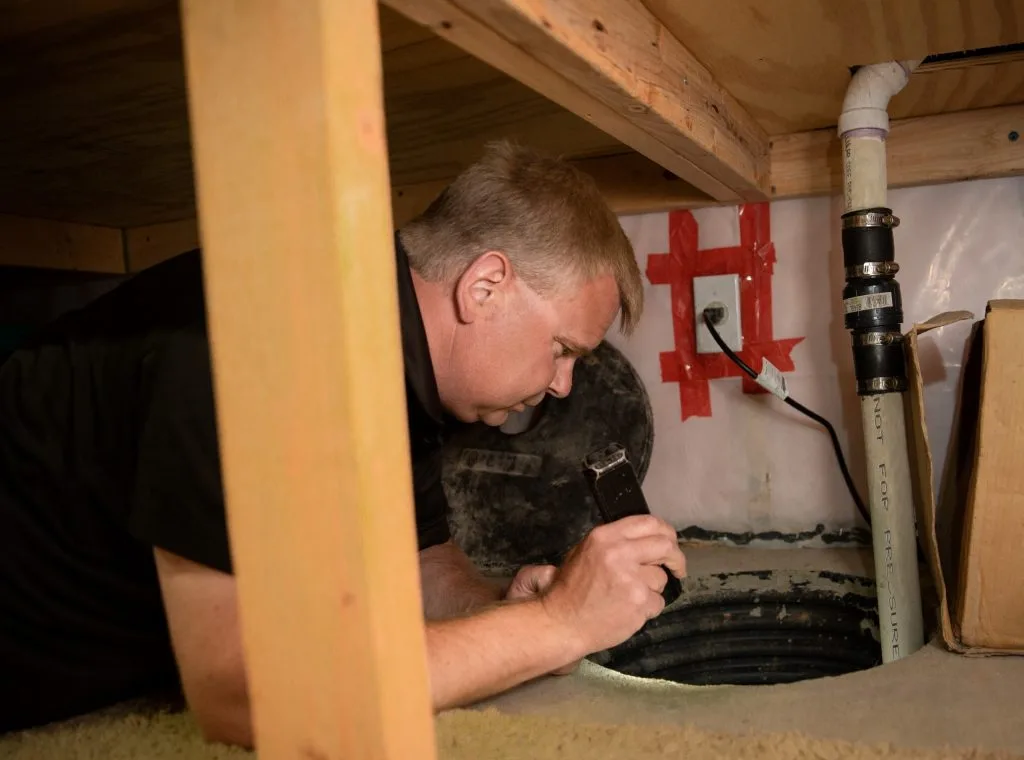
What’s in this library
The following photos document conditions observed around the exterior of the home during inspection. These images highlight safety concerns, maintenance issues, and areas where repairs or further evaluation are recommended. They are provided for your reference and to help illustrate the findings noted in the inspection report.
Free Use for Educational & Media Purposes
We believe in sharing knowledge. Students, content creators, bloggers, educators, journalists, and other media professionals are welcome to use these images for free — as long as proper credit is given.
How to Give Credit:
When using our images, please include:
- A visible credit line near the image or in your content footer
- A link back to our website
Example citation format:
Photo courtesy of Chicago Home Inspect LLC
Step-by-step:
- Download the image you’d like to use
- Add it to your content (blog, article, video, presentation, etc.)
- Place the credit line exactly as shown above, linking to our site
- If using on social media, tag @chicagohomeinspect in the caption
We appreciate your support in helping more people learn about home maintenance and inspection issues.
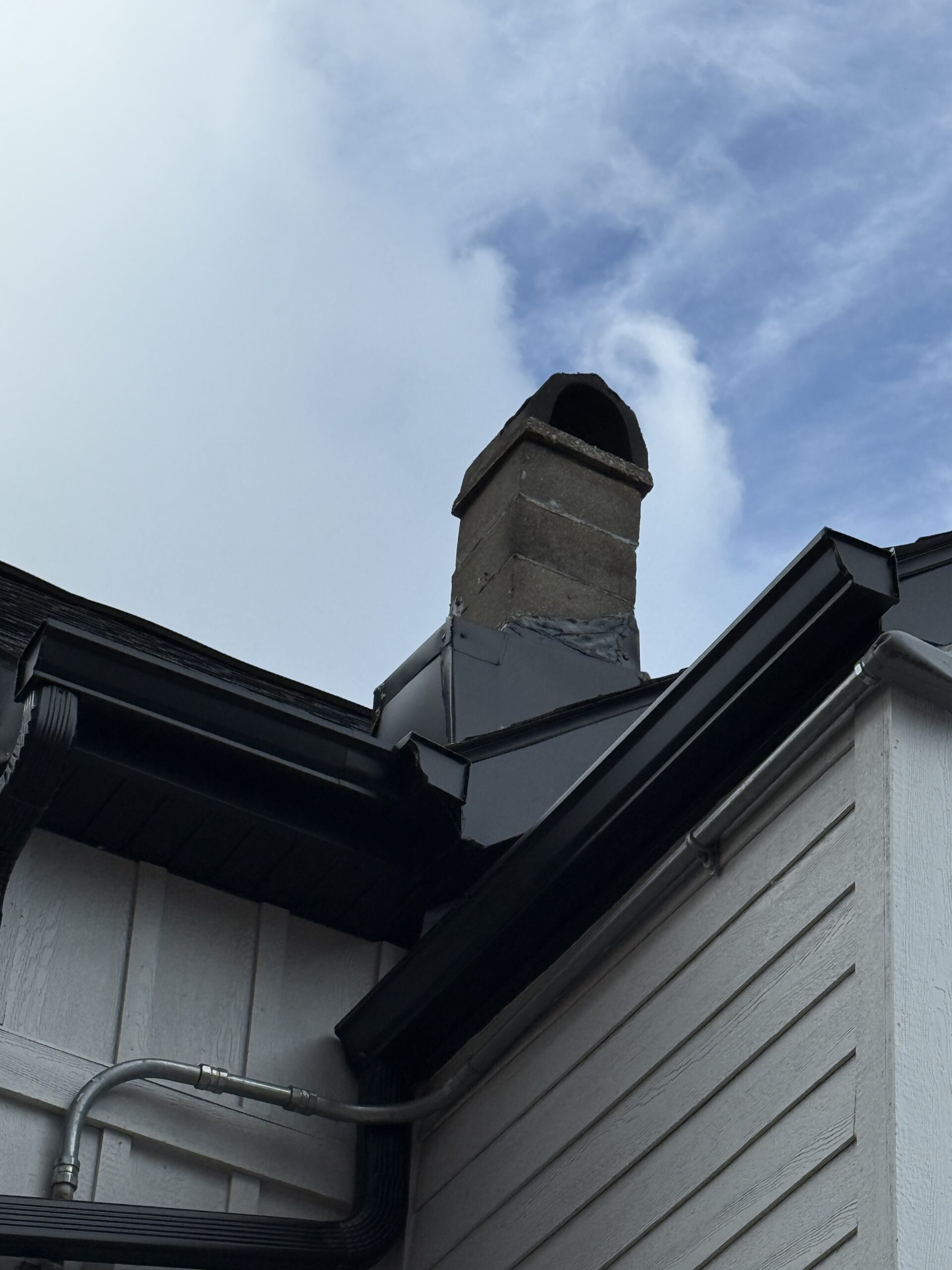
Chimney – Improper Flashing/Sealant Only
The chimney base is sealed with roofing tar or sealant instead of proper step flashing and counterflashing. This is not a durable method and may allow water penetration into the roof system and attic over time.
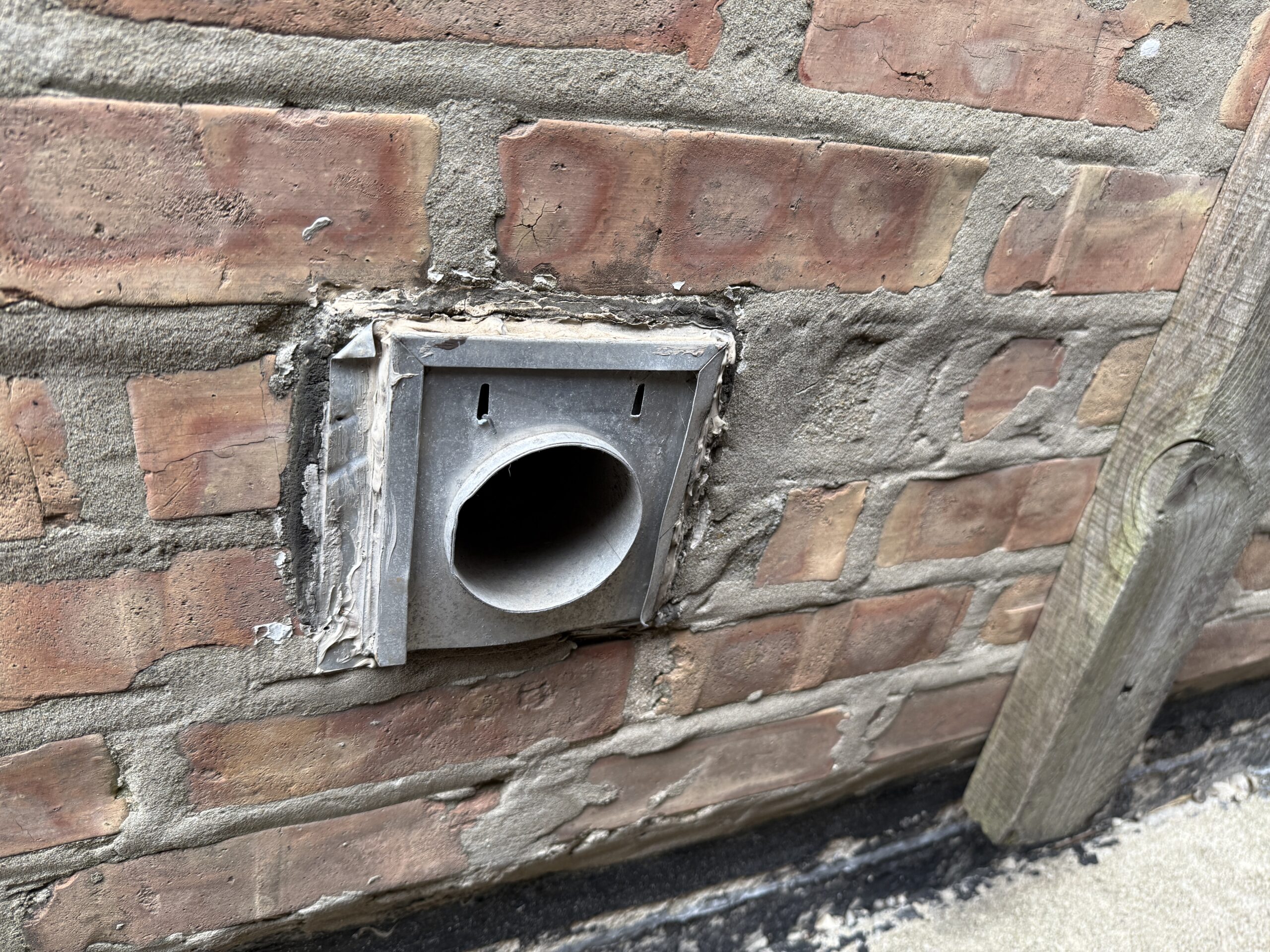
Dryer Vent – Exterior Cap Missing
The dryer vent exterior termination lacks a proper vent cap and damper. This allows pests, debris, and moisture to enter the duct and may reduce system efficiency.
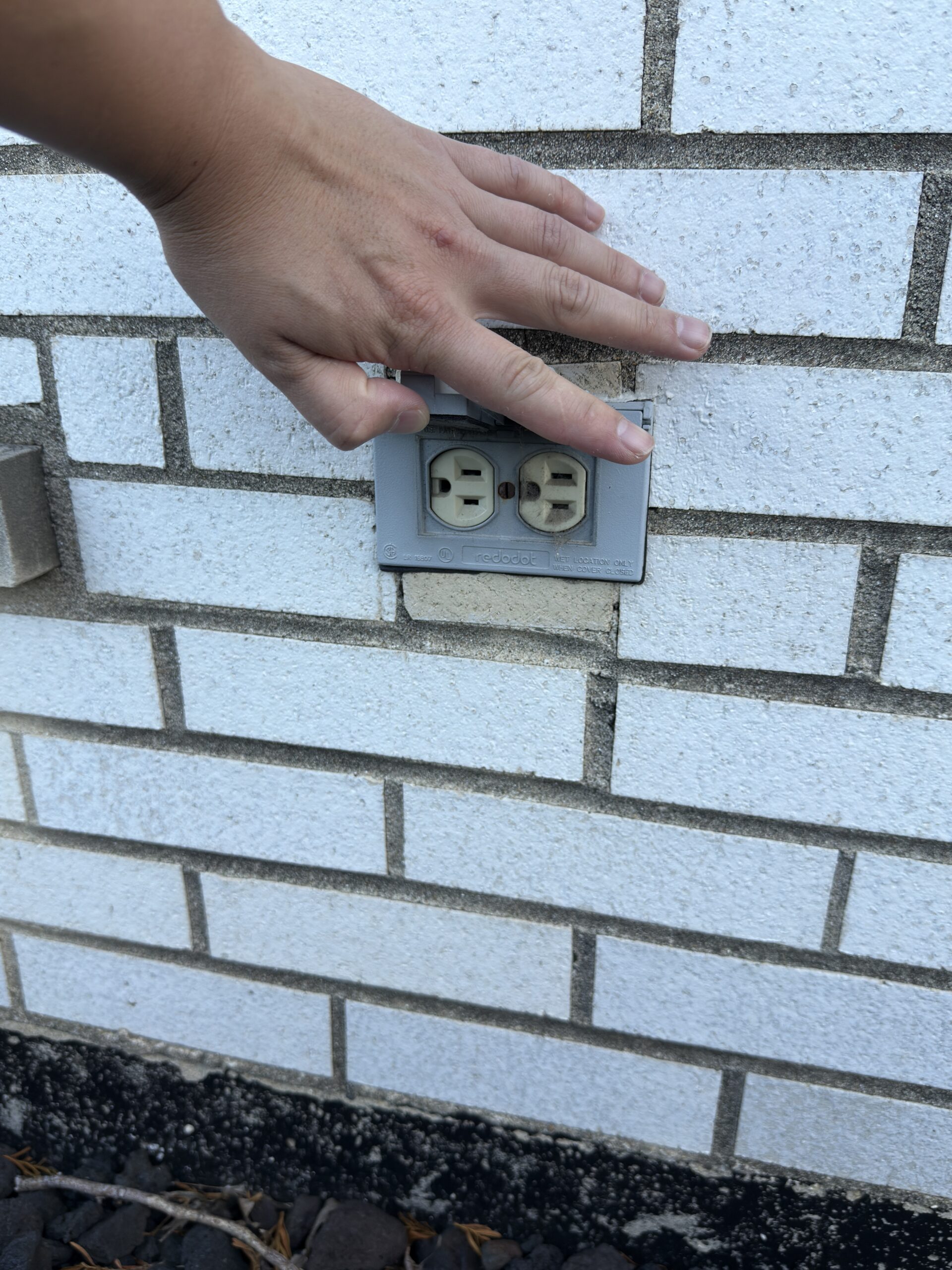
Exterior Outlet – Not GFCI Protected
The exterior receptacle is not GFCI protected as required for safety in outdoor locations. This condition presents a shock hazard in wet conditions.
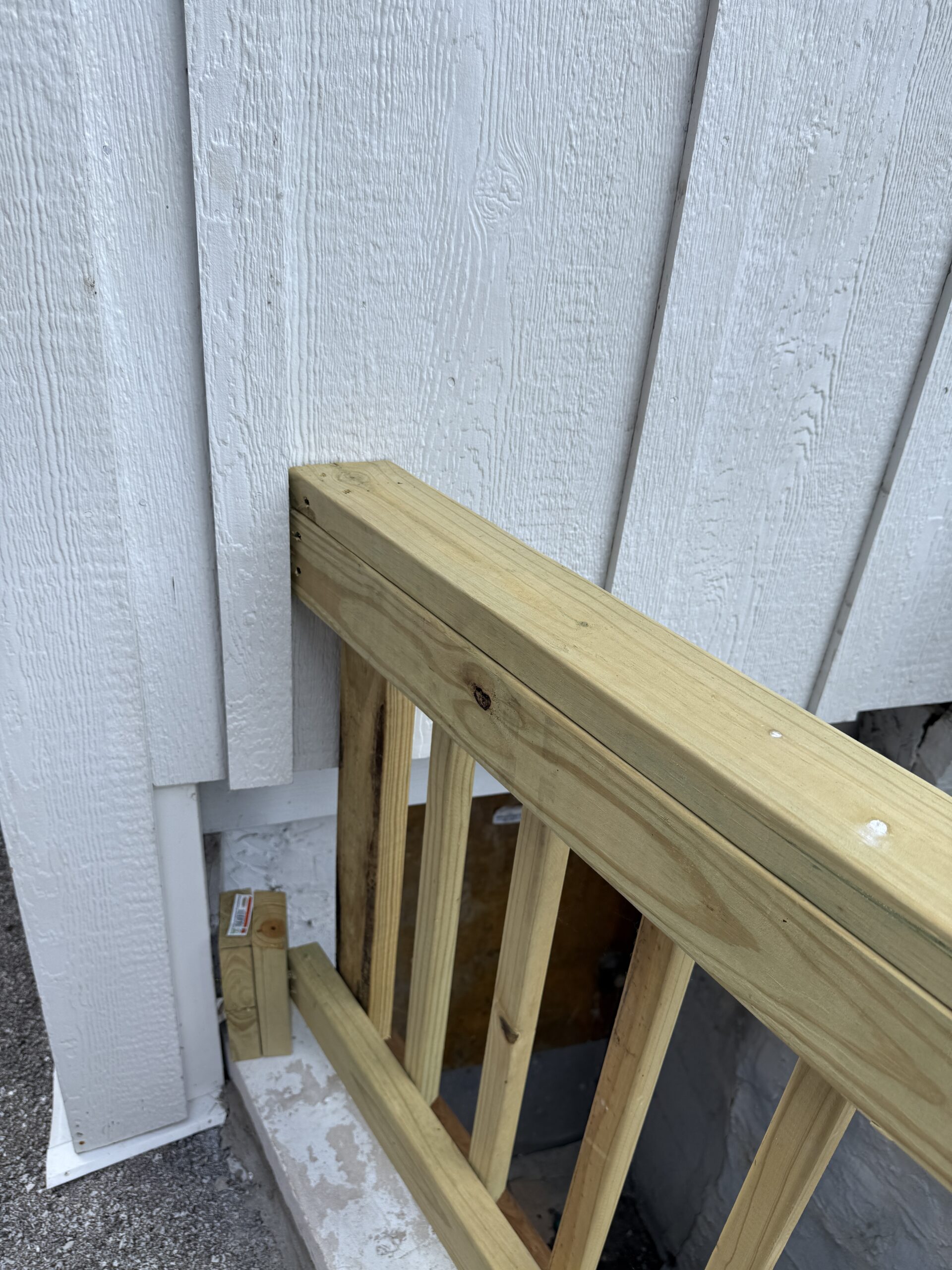
Guardrail – Improperly Attached to Siding
The guardrail is toe-nailed directly into the exterior siding rather than being properly bolted or fastened to structural framing. This creates a weak connection and may fail under load.
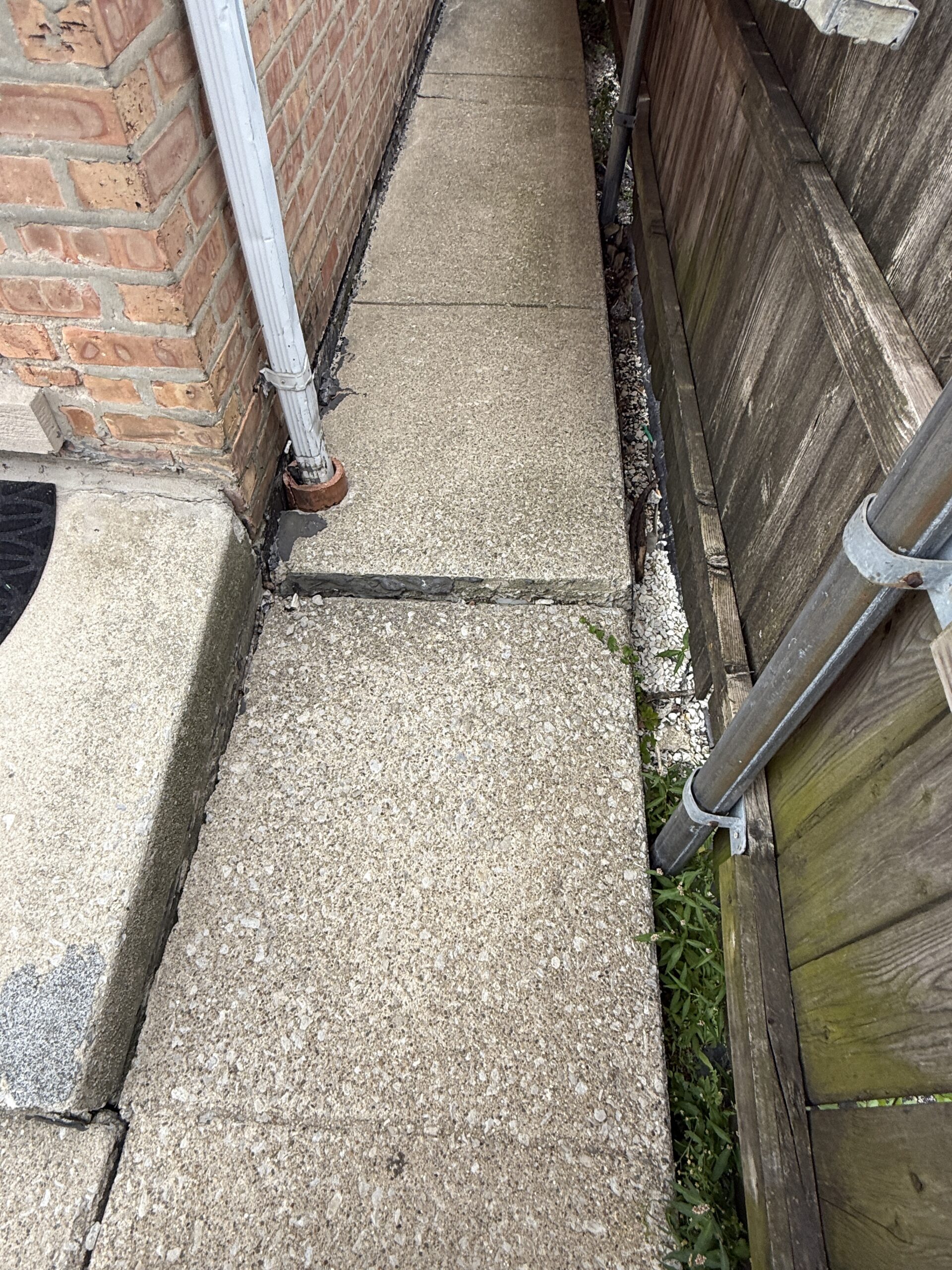
Walkway – Trip Hazard at Settlement/Displacement
Sections of the walkway are uneven and show displacement, creating a potential trip hazard. This condition can worsen over time with continued settlement.
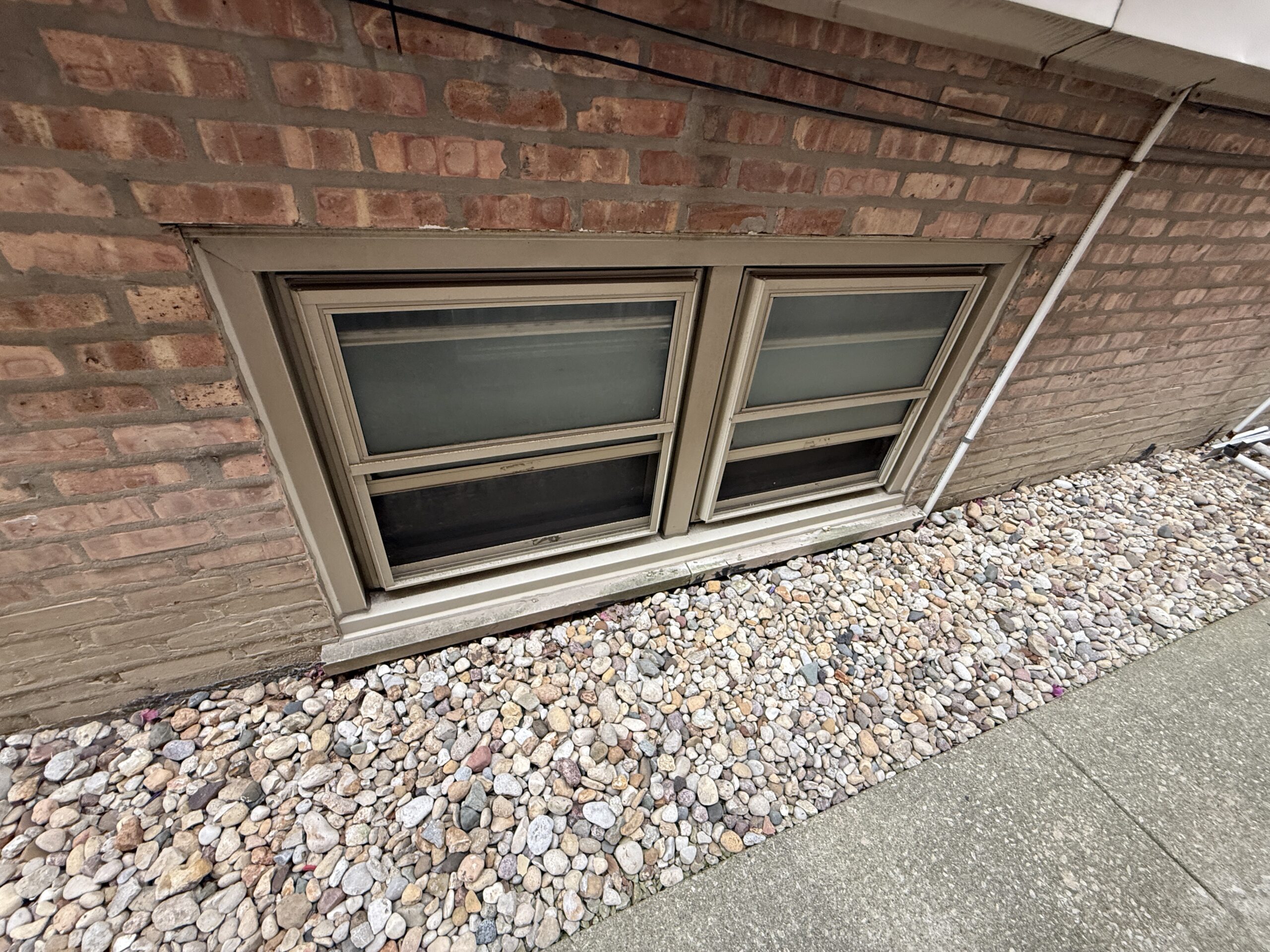
Windows – Too Close to Exterior Ground Level
The basement/low-level windows are installed very close to the exterior ground surface. Windows should maintain at least 6 inches of clearance above grade to reduce risk of moisture intrusion, deterioration, and pest entry.
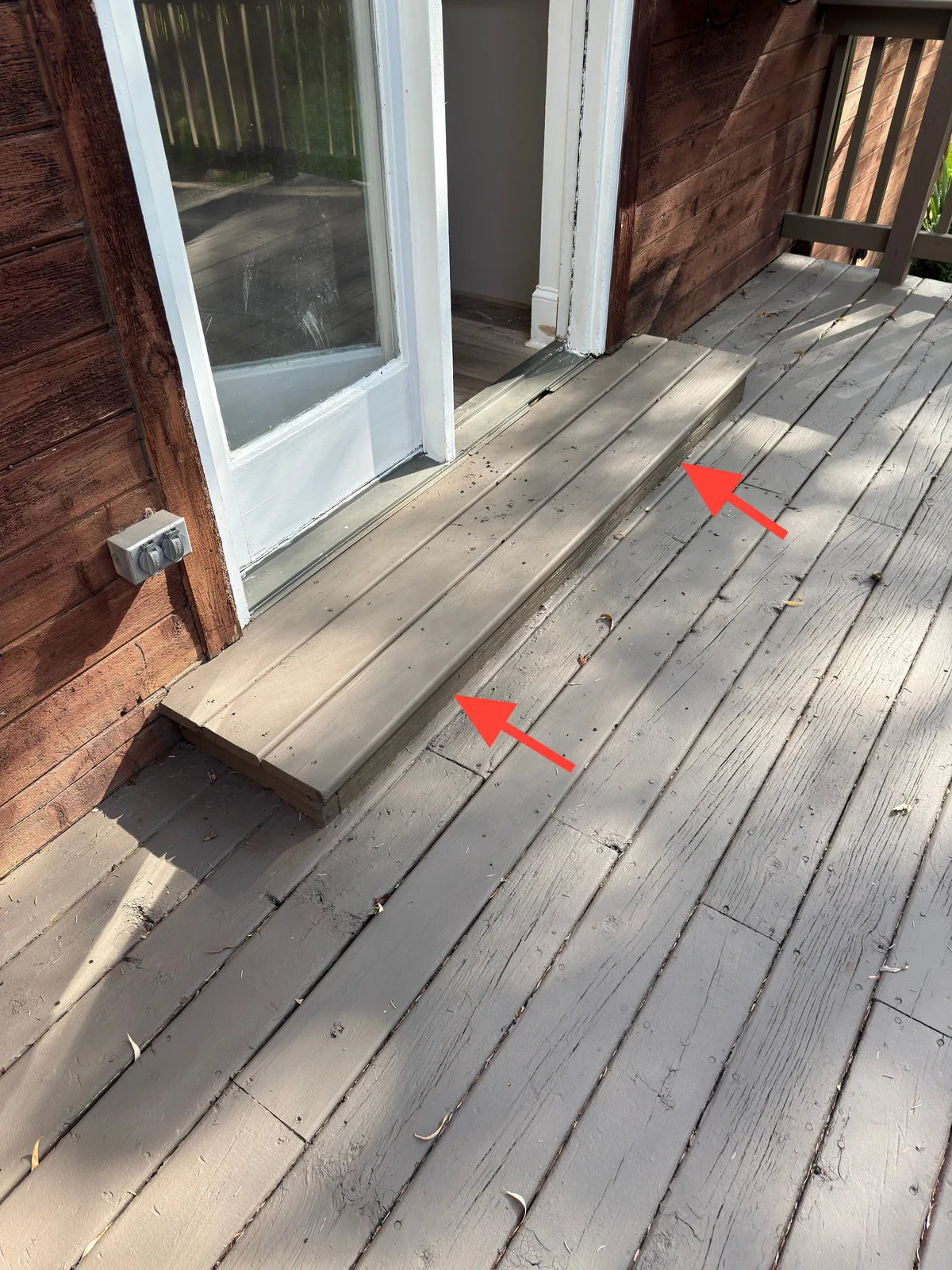
Exterior Door – Step Instead of a Landing
A single step serves this exterior door, with a tread about 12 inches deep and a 4-inch riser. Exterior door landings should be at least 36 inches deep in the direction of travel, with treads of at least 10 inches and uniform risers, so the existing arrangement is a trip hazard in poor light or when carrying items. A qualified contractor should rebuild the landing to current dimensions.
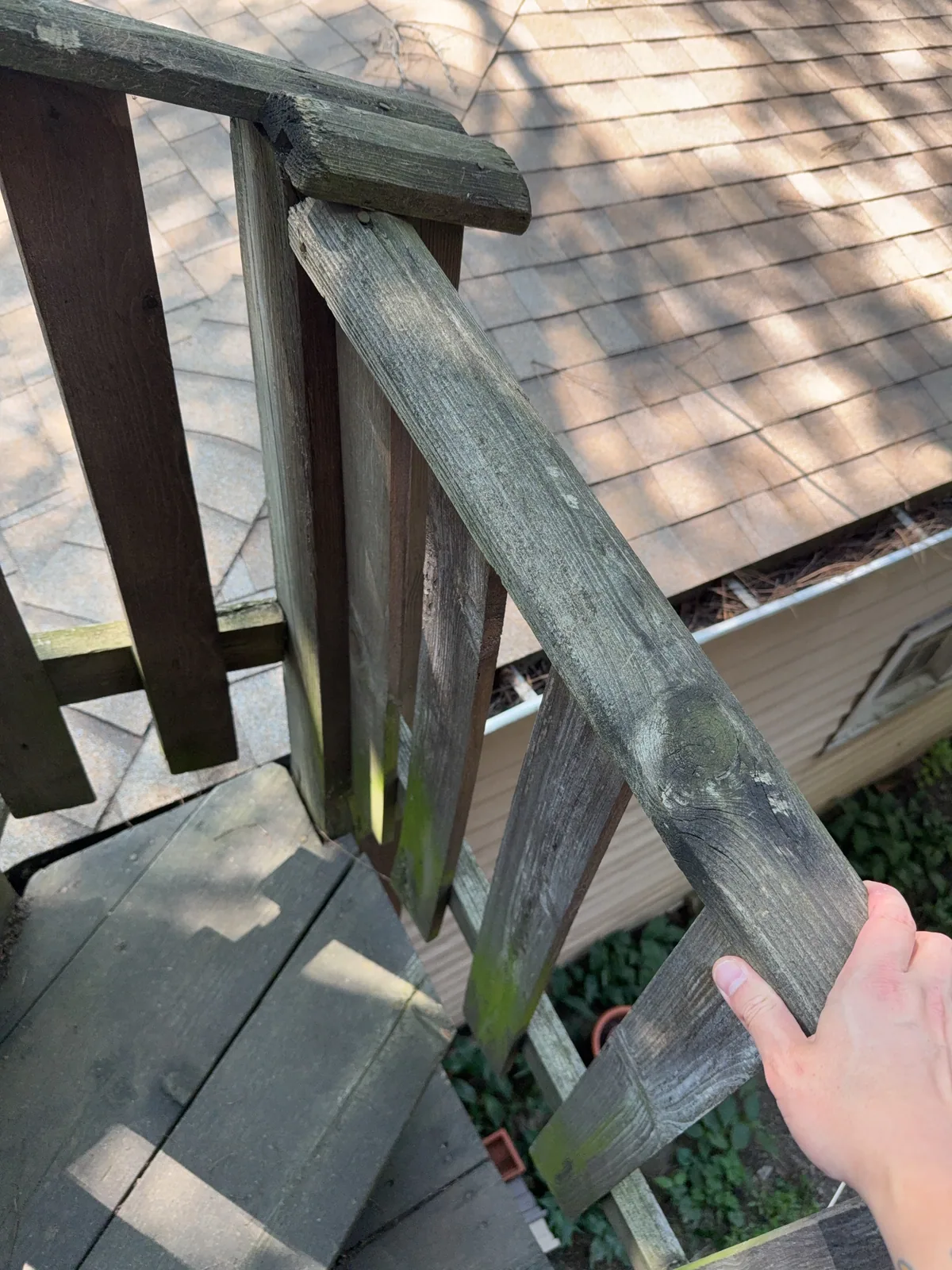
Exterior Stairway – Loose and Unstable
The exterior stairway wobbles and shifts underfoot when loaded. Movement in a stairway is a fall hazard and usually points to loose connections or deterioration in the supporting members. A qualified contractor should evaluate and repair the stair promptly.
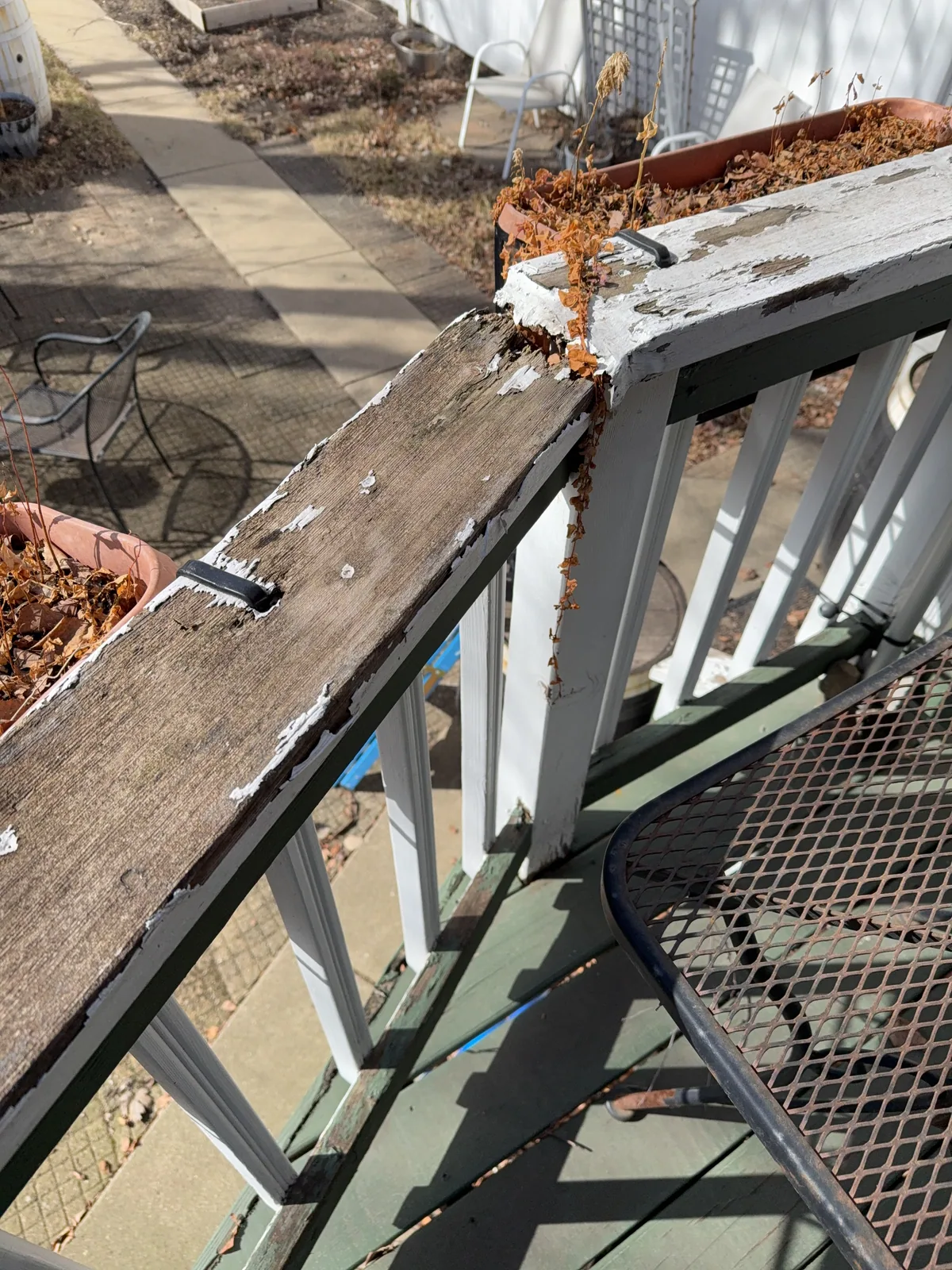
Porch Guardrail – Loose and Deteriorated
The porch guardrails are loose and show signs of deterioration. A guardrail only provides fall protection if it is securely fastened and structurally sound, so a loose rail offers little real protection at height. Repair or replacement is recommended.
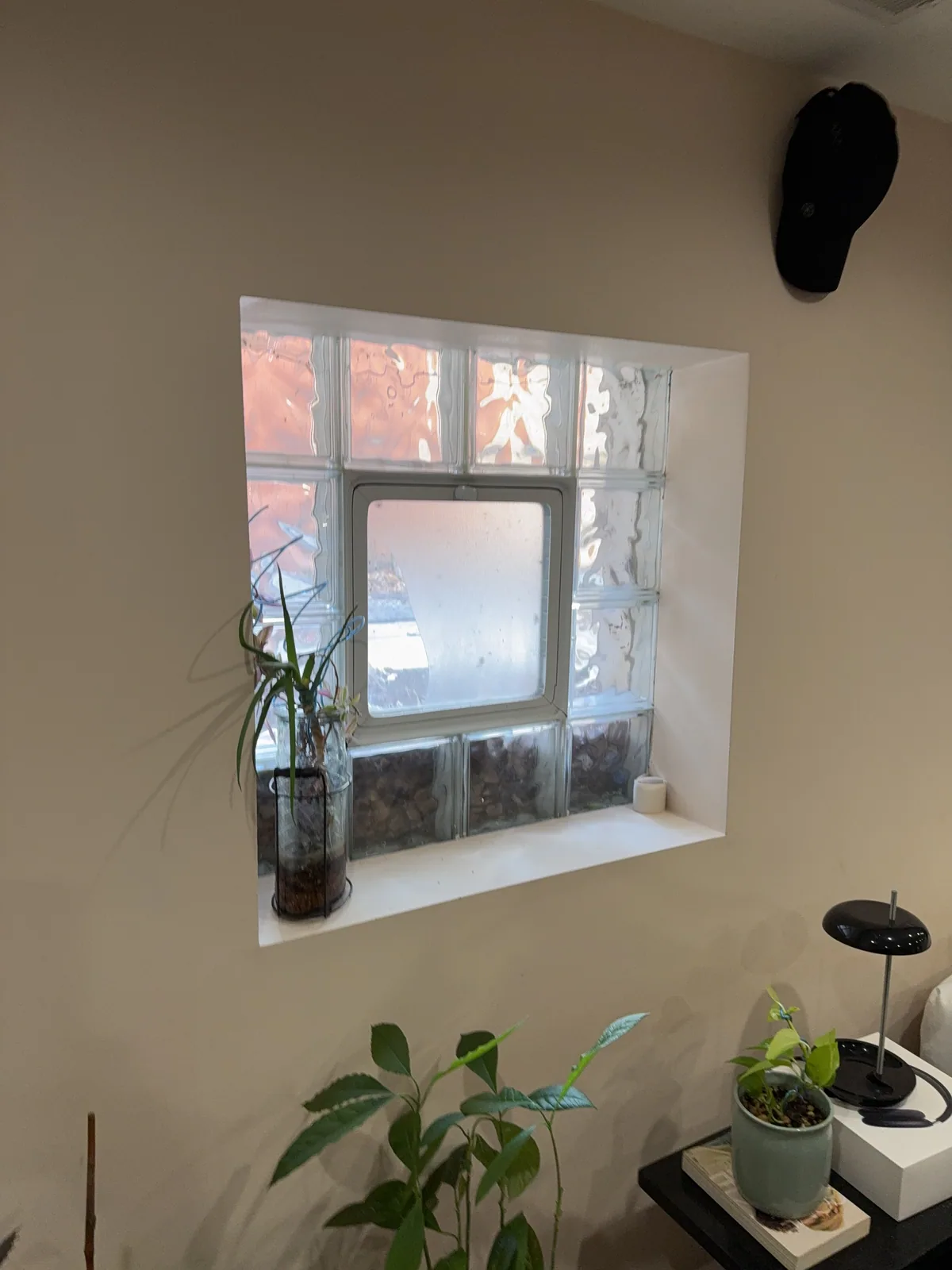
Basement Exterior Door – Limited Egress
Access and egress at the basement exterior appear limited, and the finished basement includes a sleeping area. A finished basement with a sleeping area needs egress that allows safe exit in an emergency, so this is a potential life-safety concern. A qualified contractor should evaluate and correct the egress arrangement.
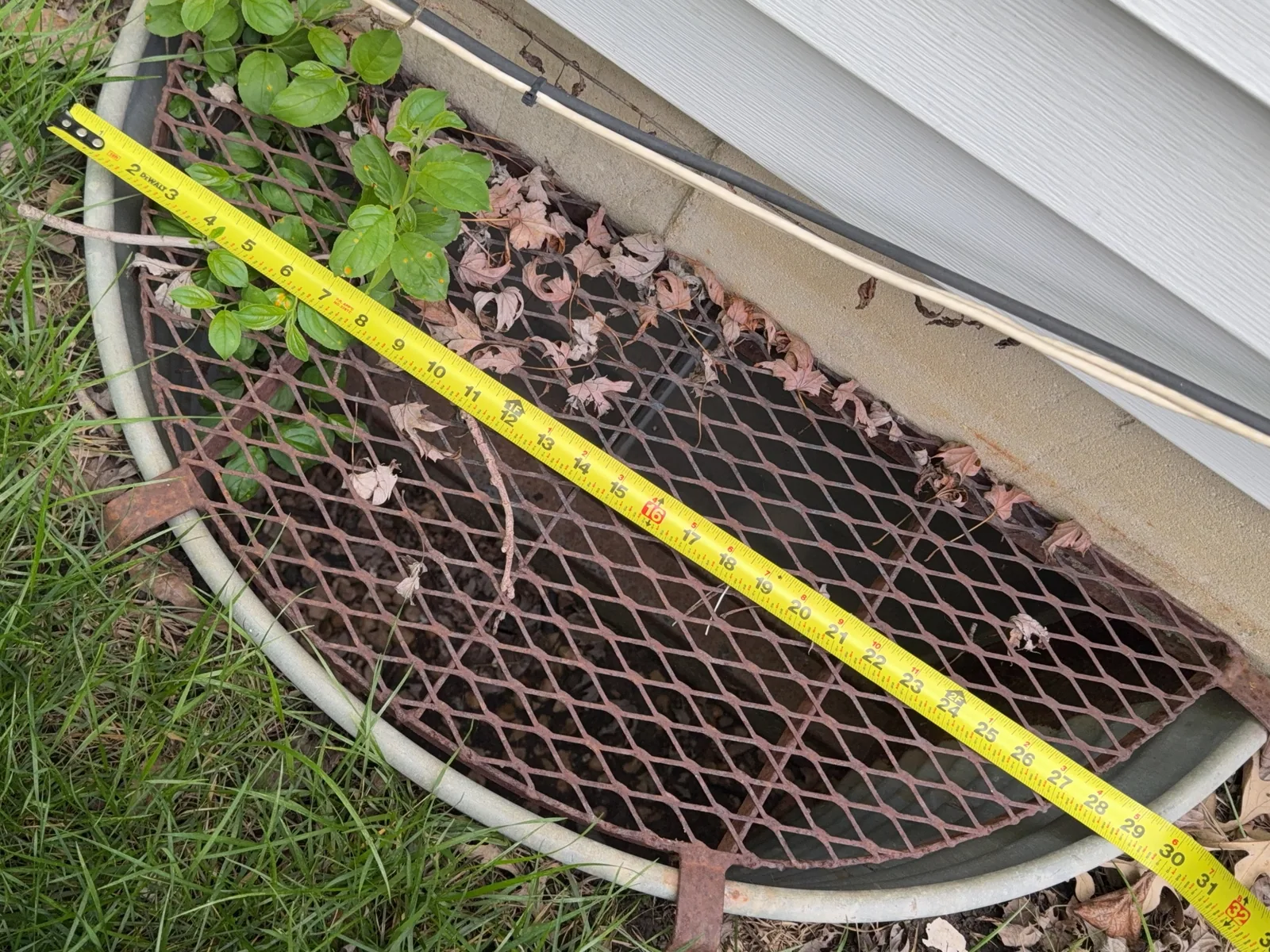
Window Well – Undersized for Egress
One or more window wells appear too small for the escape openings they serve. A window well at an emergency escape opening should give at least 9 square feet of area with a minimum projection and width of 36 inches, and needs a permanently fixed ladder if it is deeper than 44 inches. A qualified contractor should evaluate and correct the wells.
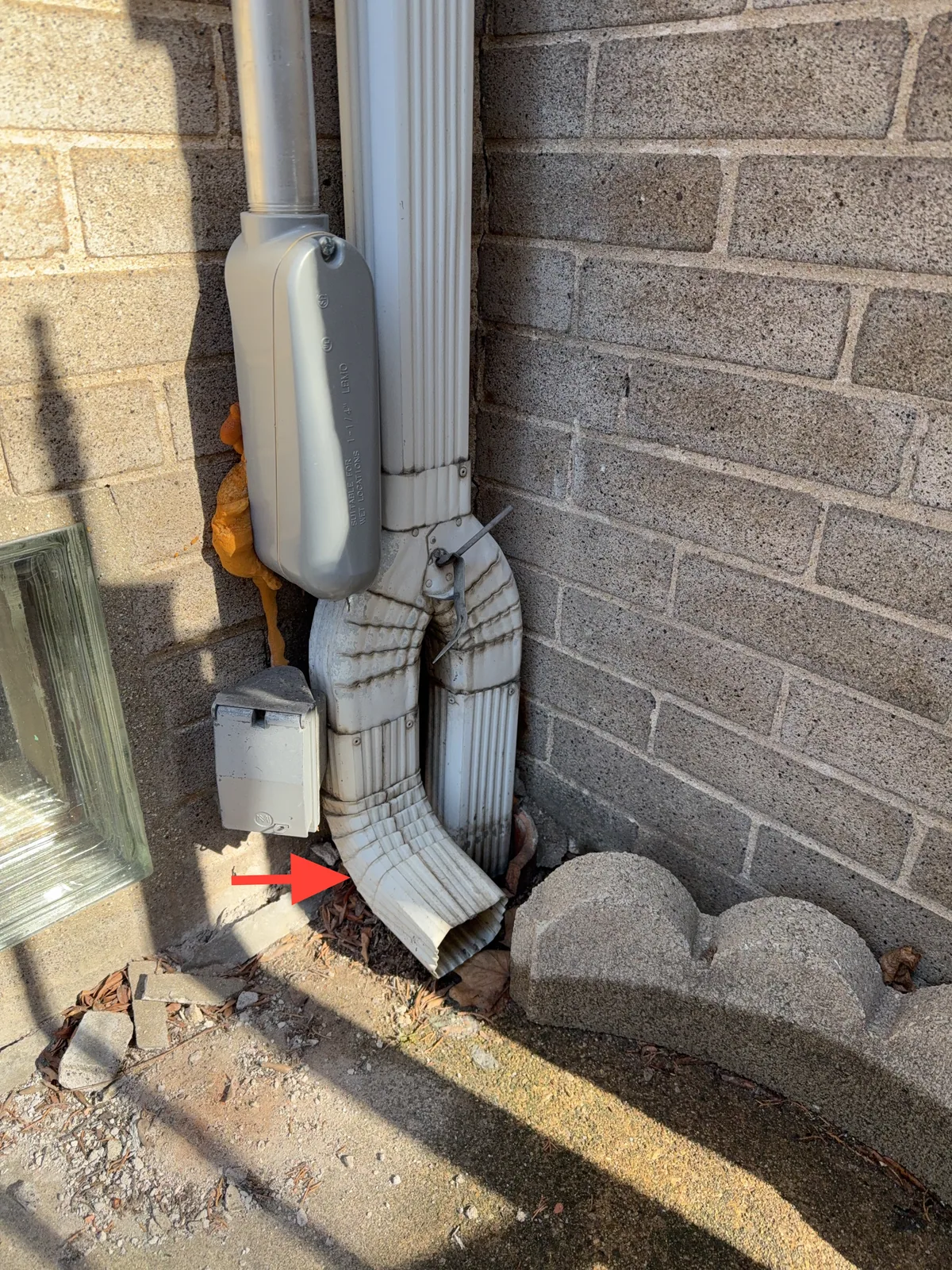
Downspout – Discharging at the Foundation
The downspouts discharge roof drainage directly next to the foundation. Saturating the soil against the foundation invites soil and foundation movement and basement moisture. Extensions should be added to carry the discharge well away from the house.
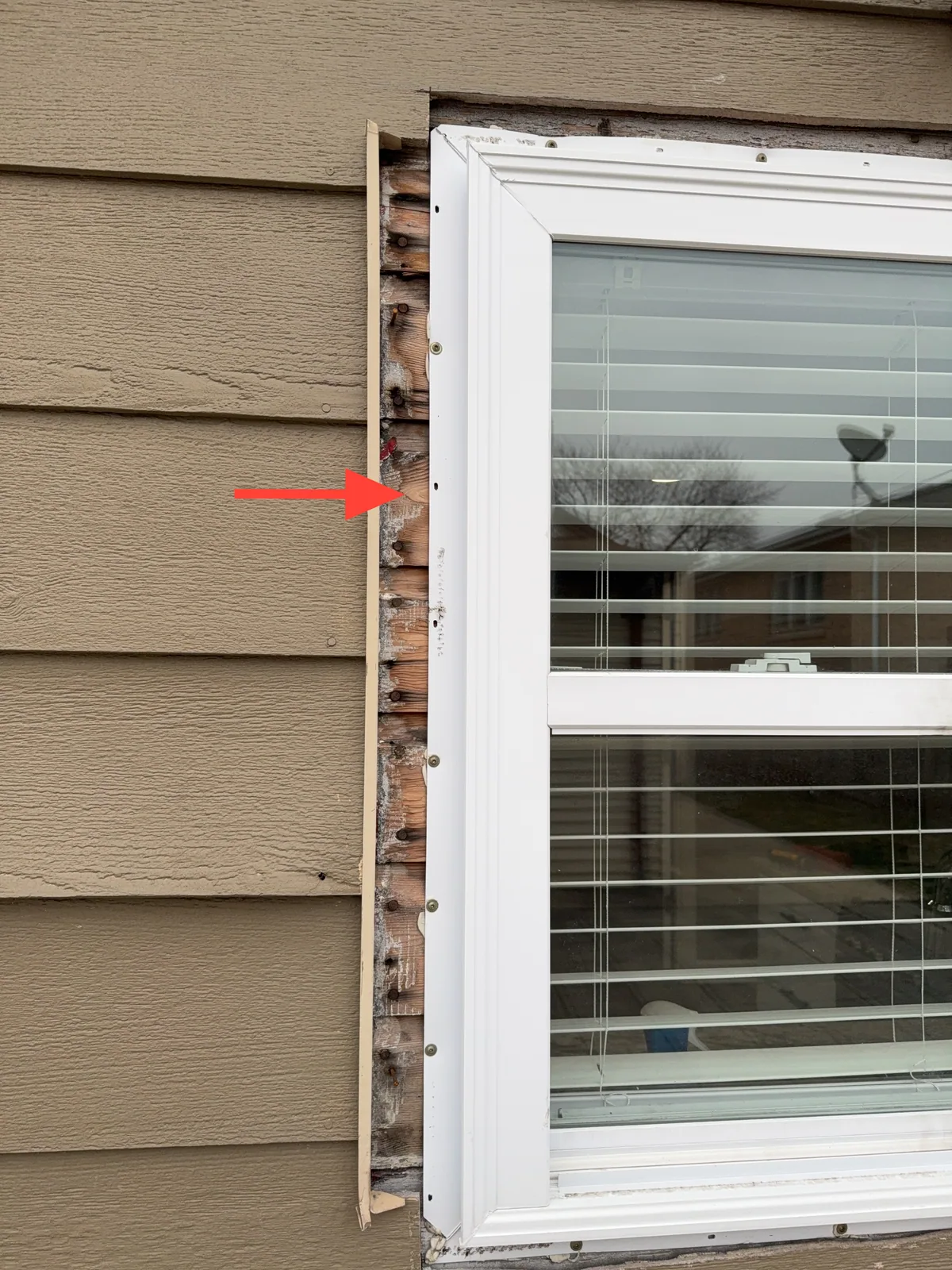
Exterior Windows – Exposed Sheathing and House Wrap
Wall sheathing and house wrap are left exposed around several windows. These areas are not weather-resistant on their own and will let moisture into the wall assembly. The openings should be properly finished, flashed, and sealed.
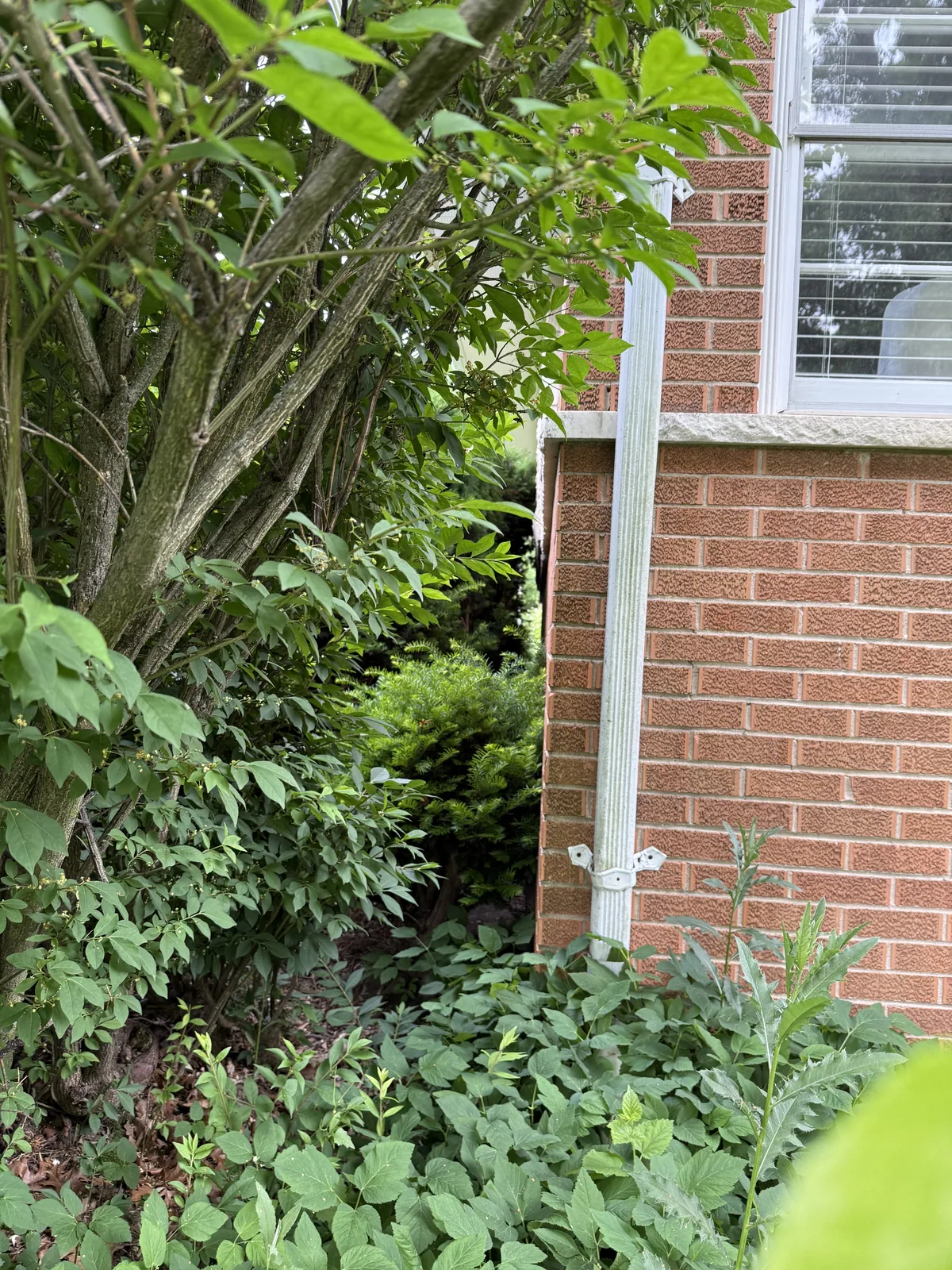
Grounds – Vegetation Against the Walls
Vegetation around the exterior walls is overgrown and in contact with the siding. Plant growth against a wall holds moisture, blocks drying, and gives insects a bridge into the structure. The growth should be cut back to keep clearance around the building.
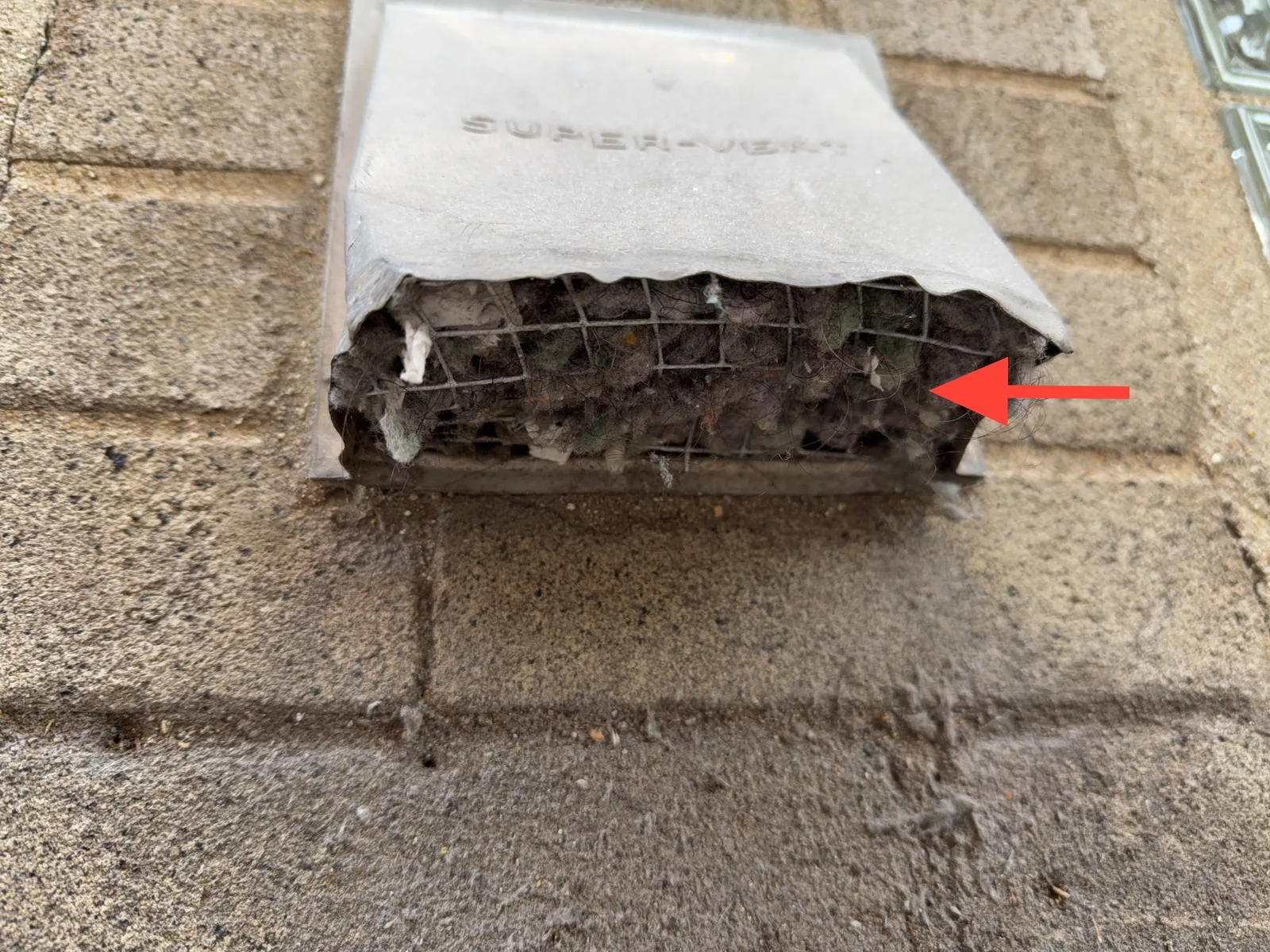
Dryer Vent – Screened and Clogged with Lint
The exterior dryer termination has a screen fitted and is heavily obstructed with lint and debris. Screens do not belong on dryer vents; they trap lint, restrict airflow, and create a fire hazard. The screen should be removed and the termination cleaned so the duct can discharge freely.
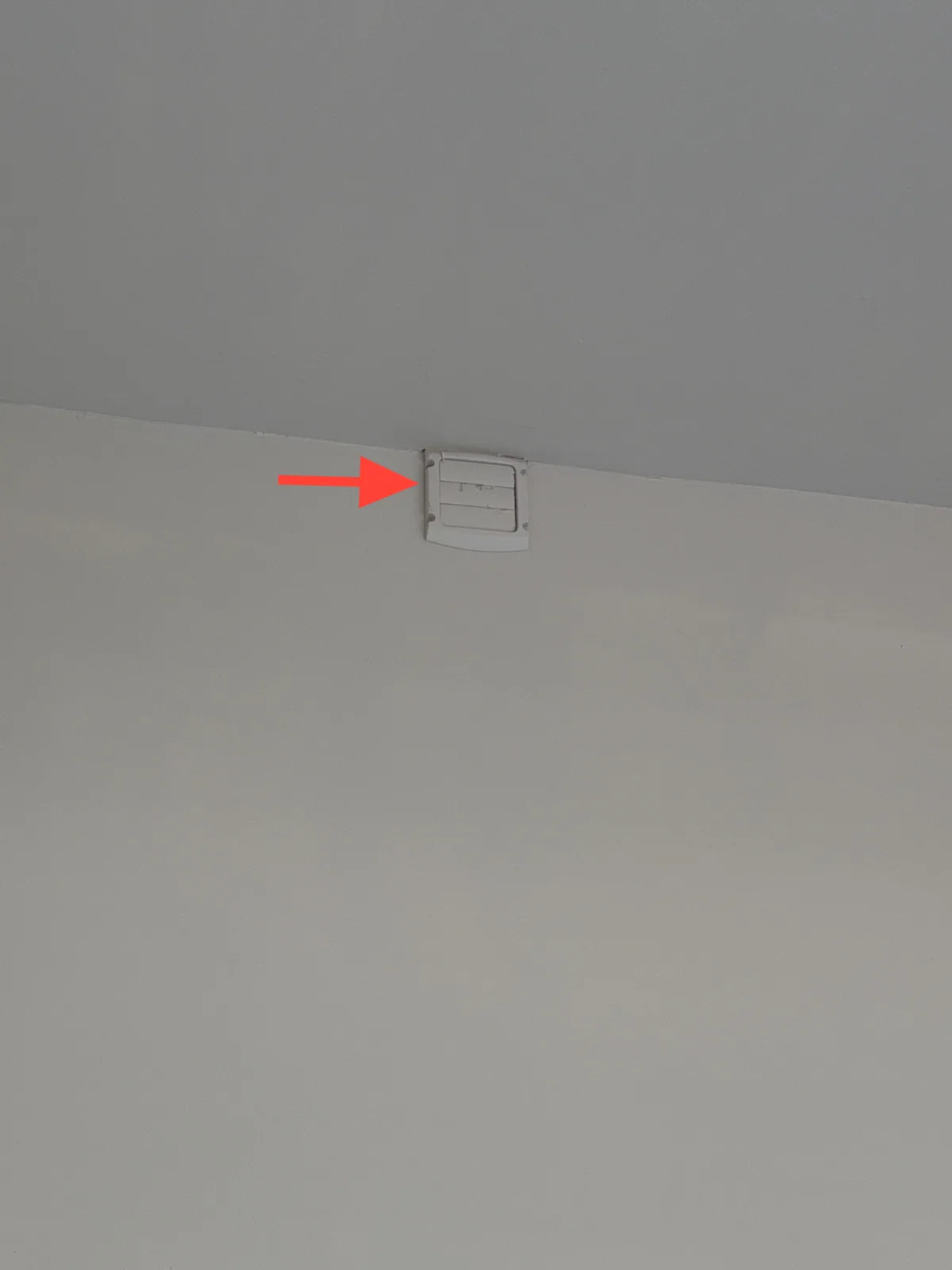
Exhaust Vents – Terminating Inside the Garage
Dryer and bathroom exhaust vents discharge into the garage rather than to the exterior. This dumps moisture and lint into the garage, adds a fire hazard, and breaks the fire-resistant separation between the garage and the living space. A qualified contractor should re-route both vents to terminate outside.
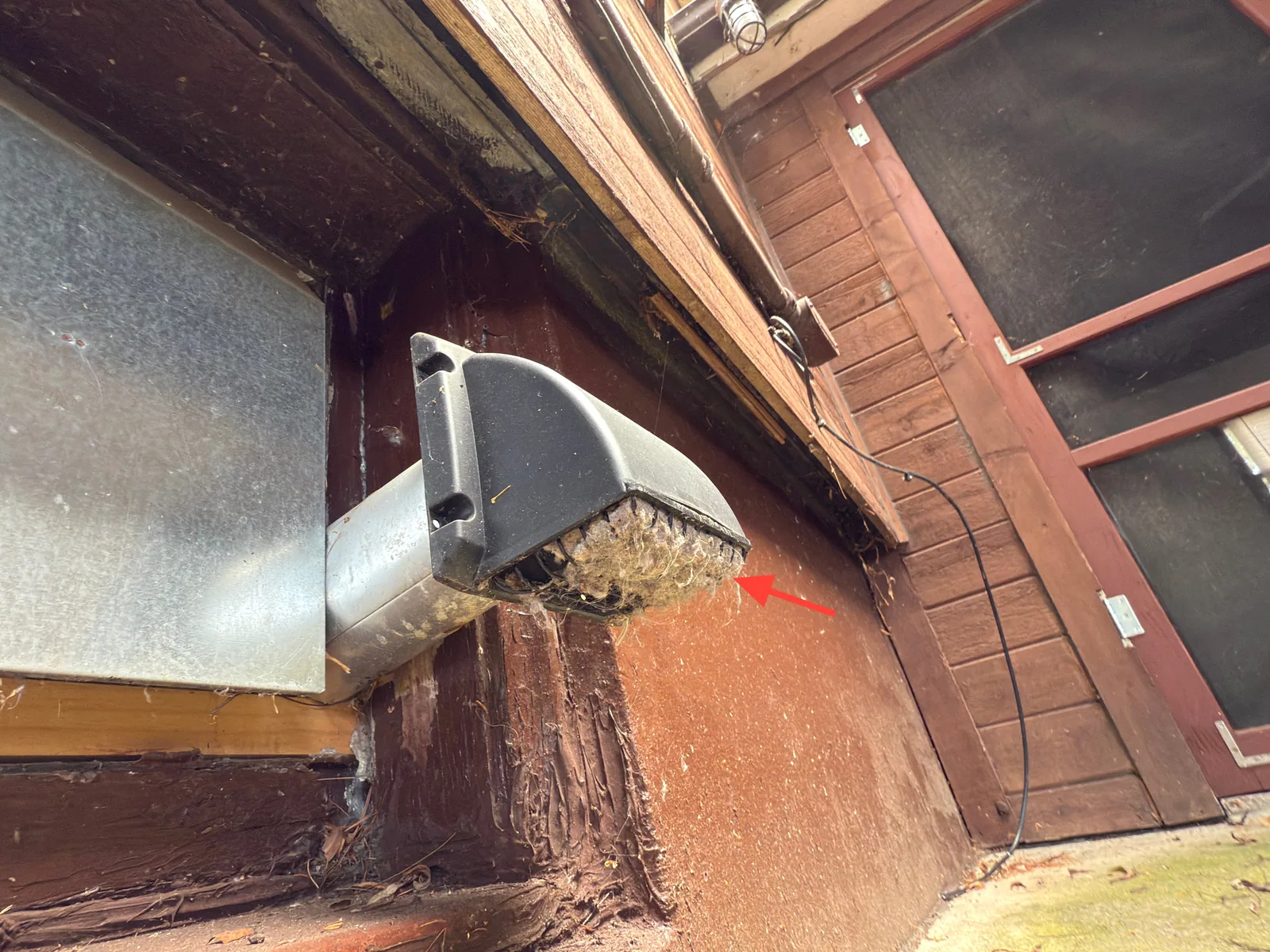
Dryer Termination – Lint Built Up on a Screened Cover
The exterior dryer termination has a screened cover with lint packed against it. Screened dryer terminations trap lint and restrict airflow, which makes the dryer work harder and raises the risk of fire. It should be replaced with a proper louvered or flap-type termination made for dryer exhaust.
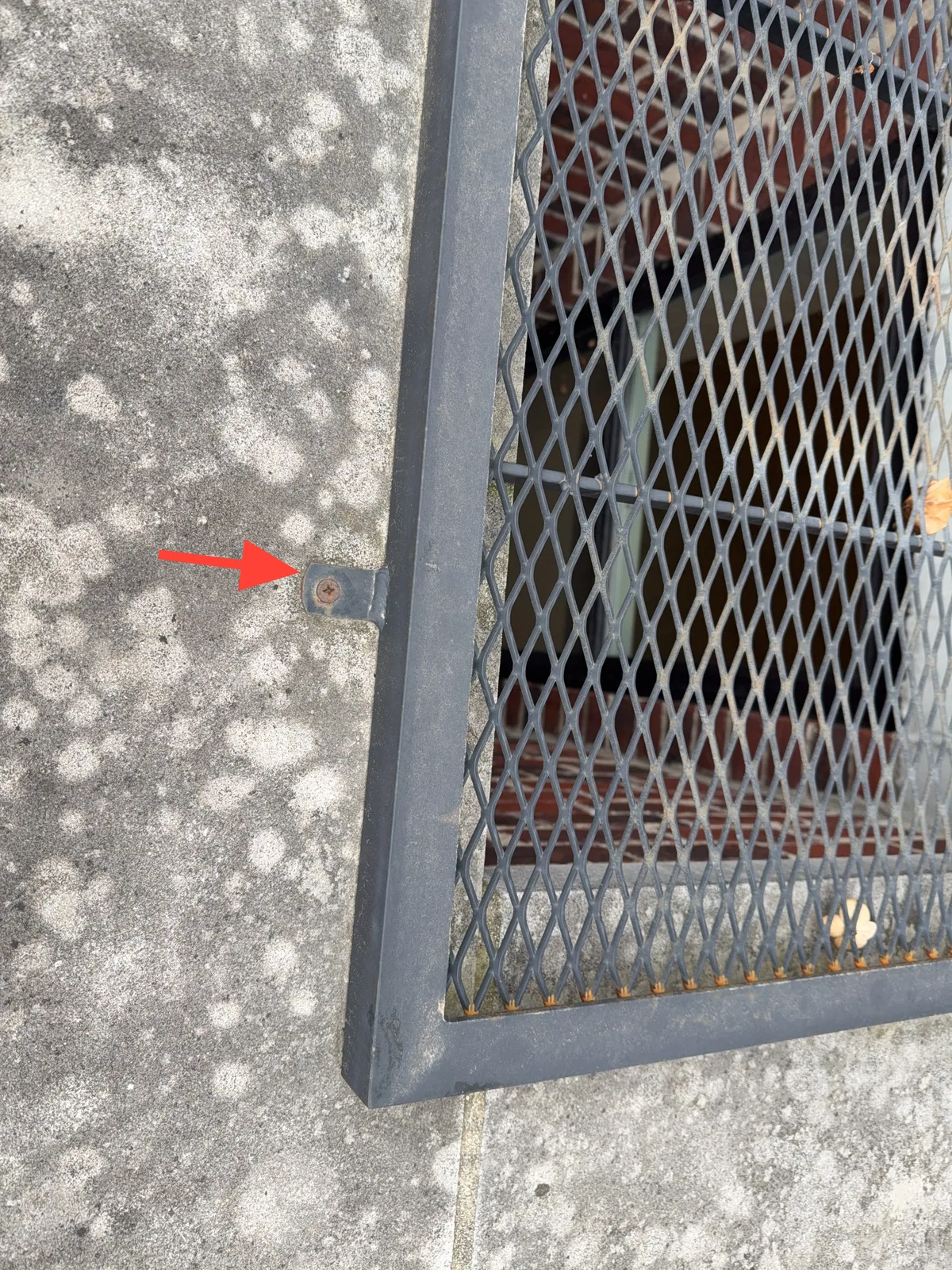
Window Well Covers – Fastened Shut with Screws
Window well covers are secured with screws. Fastening a cover permanently keeps it from blowing off, but it also blocks emergency escape and makes maintenance access difficult. At any window serving as an emergency escape opening the cover should release from inside without tools.
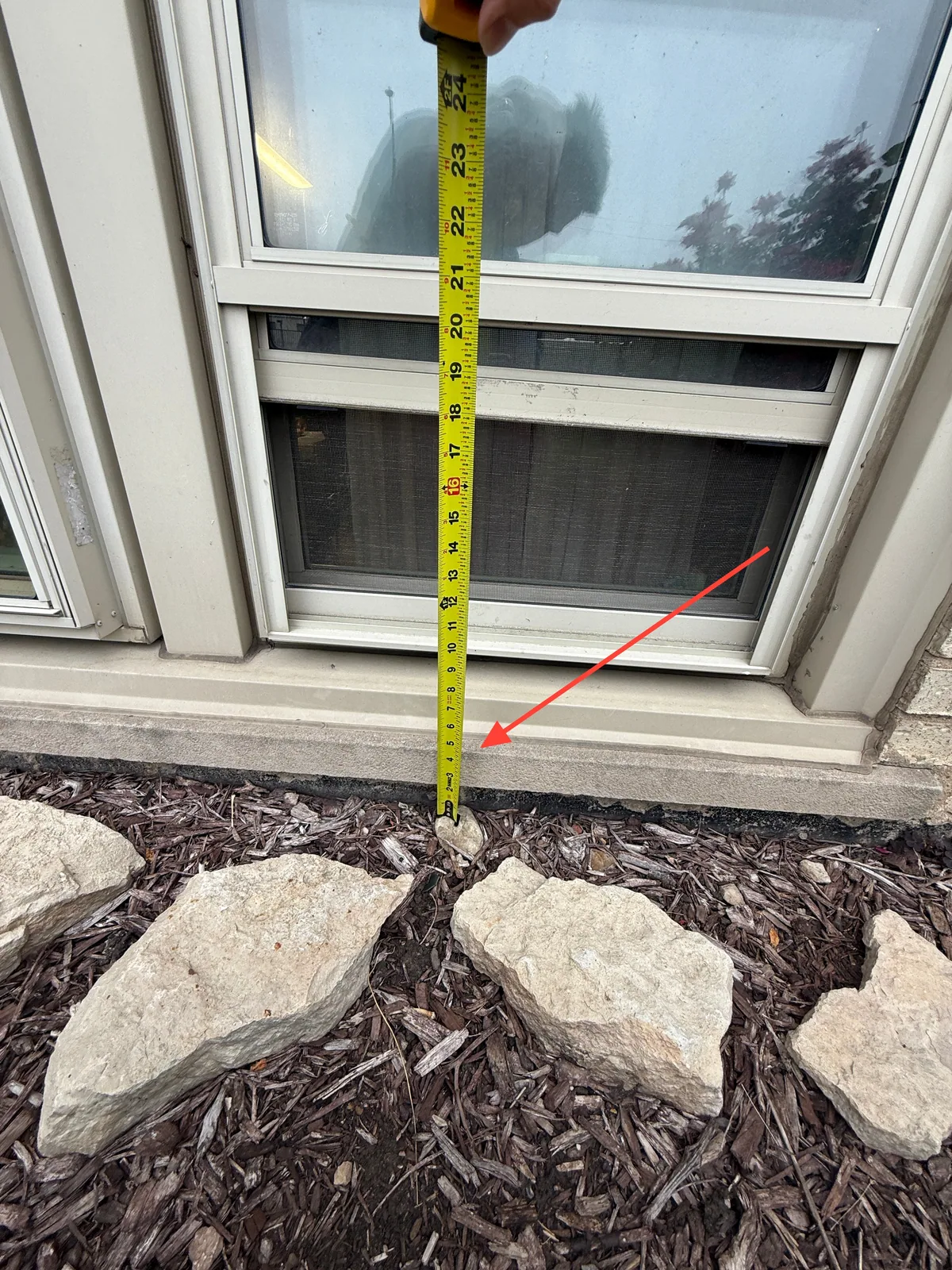
Exterior Window – Too Little Clearance Above Grade
The window sits close to the surrounding soil with little clearance beneath it. Rain splashback and trapped moisture at grade lead to rot in the trim and framing and give pests a way in. Aim for at least 6 inches between the bottom of the trim or siding and the soil or mulch.
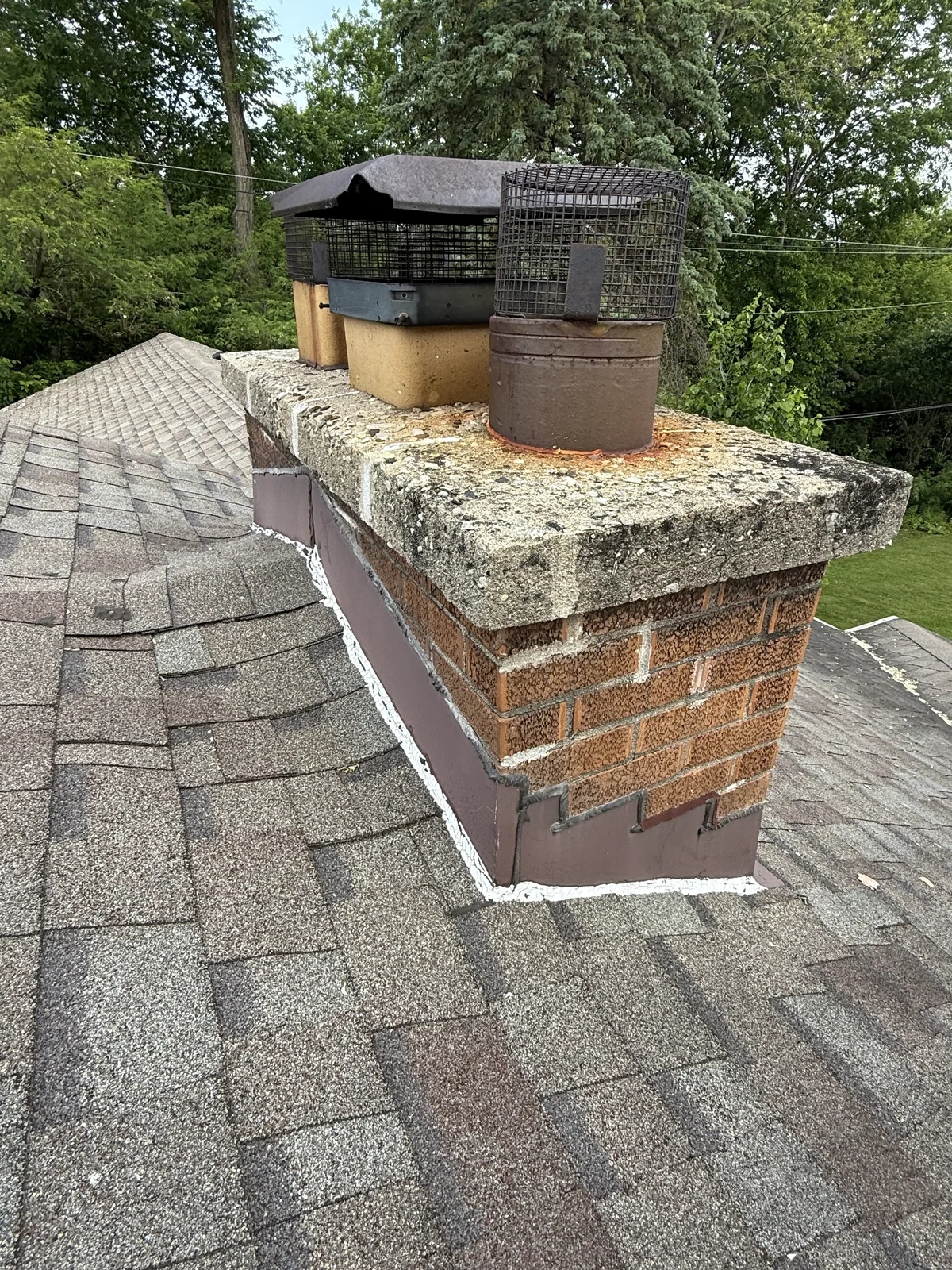
Chimney – Height Below the 3-2-10 Rule
Chimney height should follow the 3-2-10 rule: at least 3 feet above the point where it passes through the roof, and at least 2 feet higher than anything within 10 horizontal feet. Falling short of this hurts draft and raises the risk of backdrafting and fire. A qualified contractor or chimney specialist should evaluate the height and clearances.
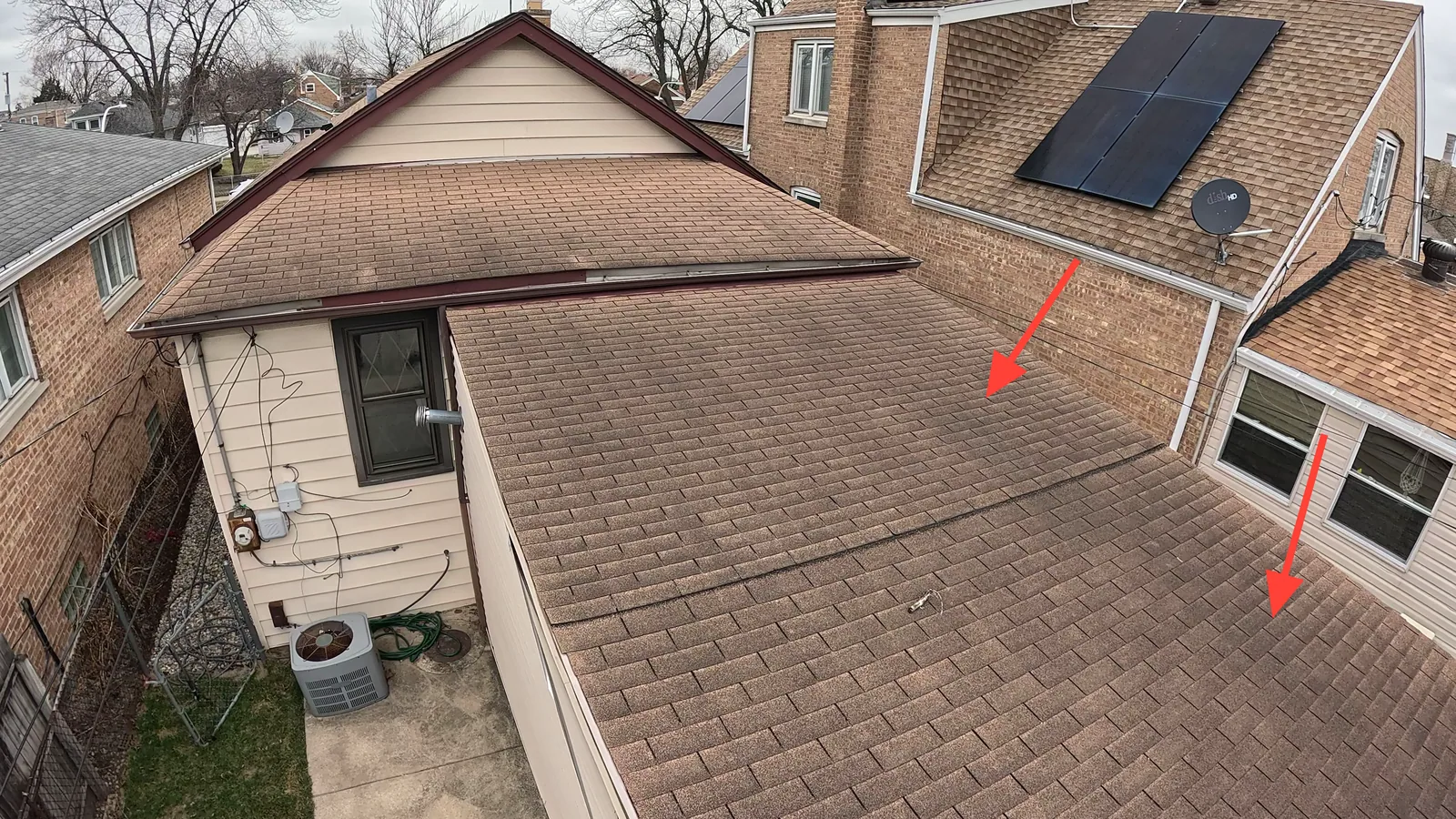
Asphalt Shingles – Installed on a Low Slope
Asphalt shingles have been installed on a roof section that appears to be low slope. Shingles generally need a slope of about 2:12 or steeper to shed water reliably, and below that they are prone to water intrusion. Further evaluation is recommended.
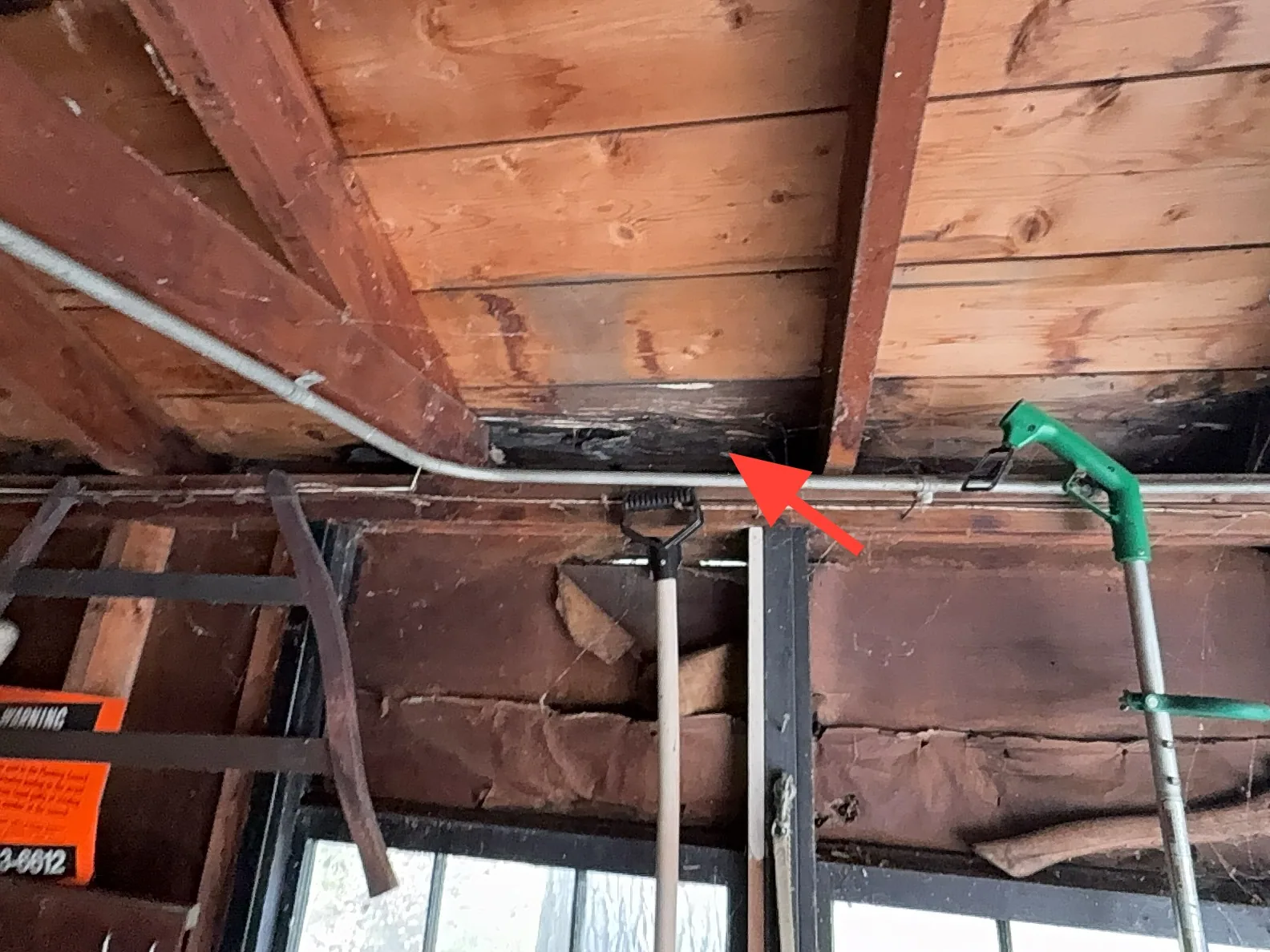
Garage Roof – Shingles Severely Degraded
The asphalt shingles on the garage roof are badly worn and have lost much of their protective granule surface, and there is evidence of moisture on the roof sheathing beneath. Once the granules are gone the shingles no longer shed water, and water is already reaching the deck. A qualified roofing contractor should repair or replace the roofing before the structure is damaged.
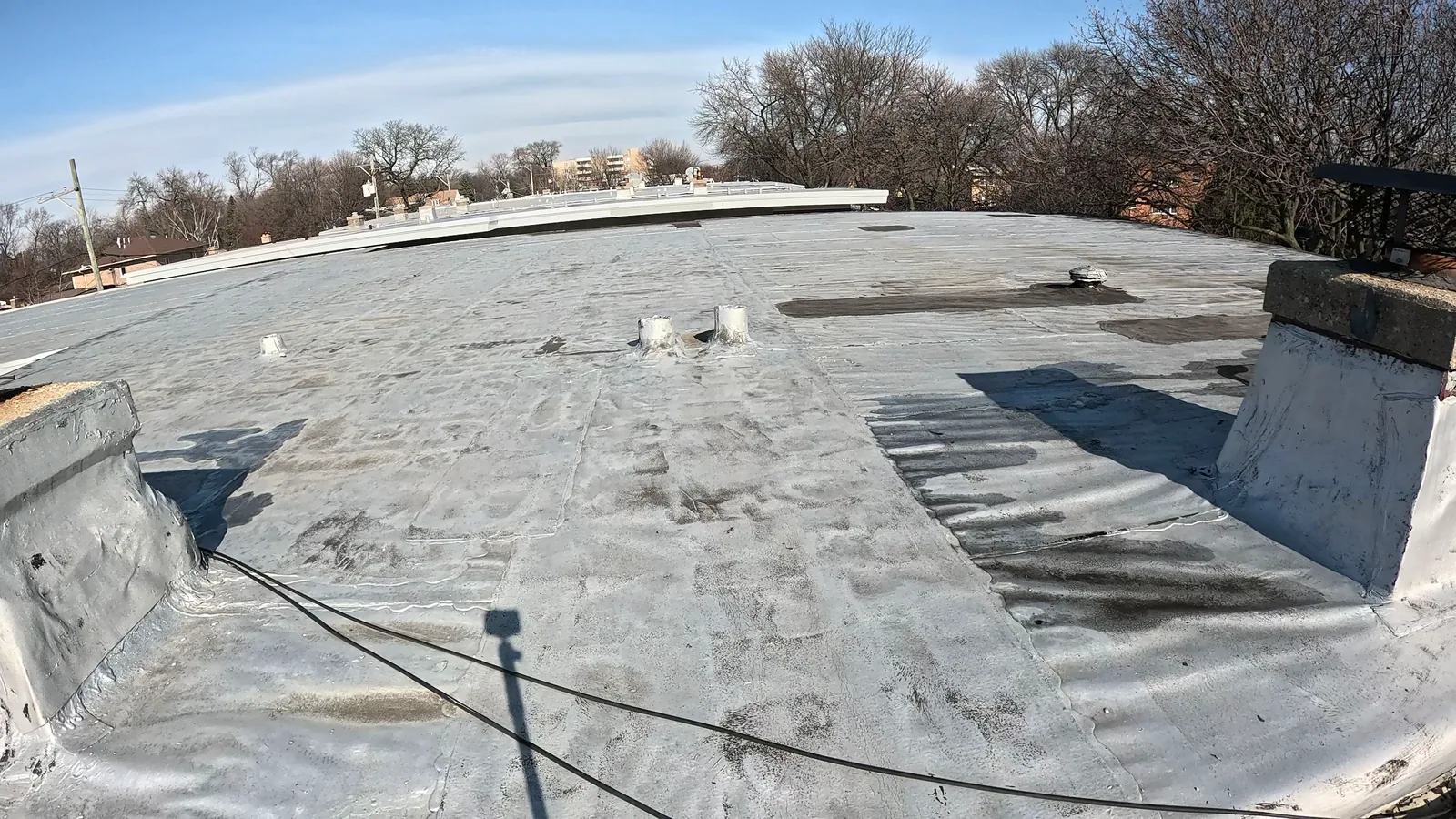
Low-Slope Roof – Aged and Heavily Patched Membrane
This low-slope roof is finished with a modified bitumen or smooth rolled membrane under a reflective coating, and shows repeated patching with roof cement across the field. Ponding, surface wear, and deteriorated flashing at the penetrations and chimney base all point to a membrane near the end of its service life. A qualified roofing contractor should assess whether continued patching is worthwhile.