
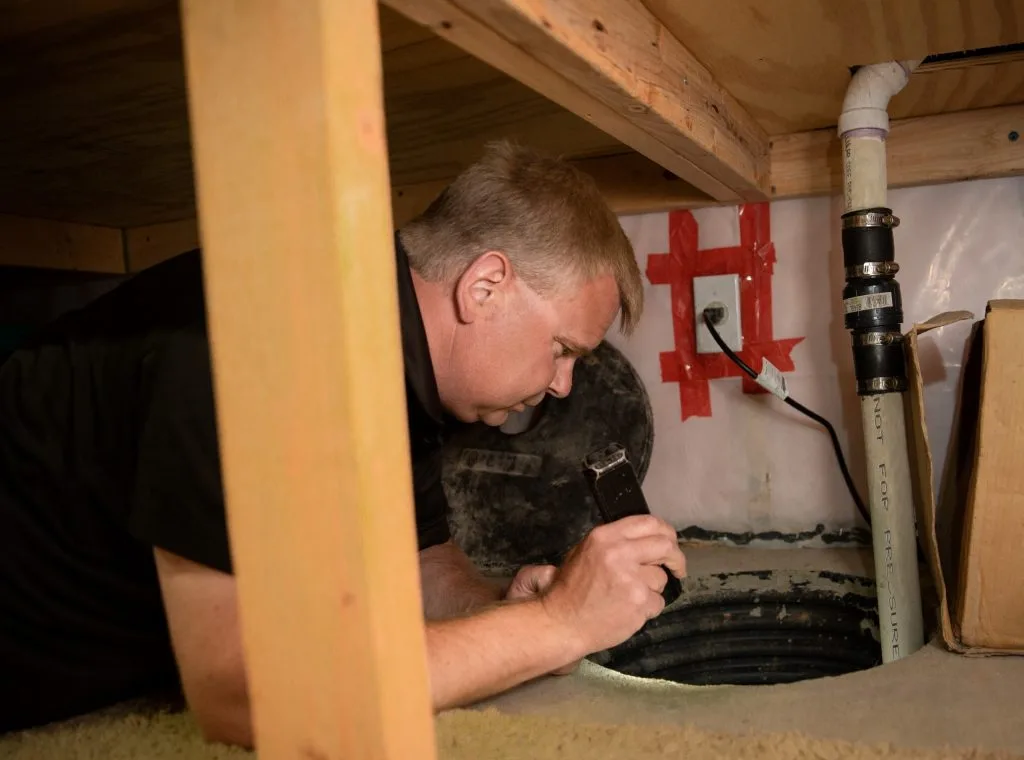
What’s in this library
The following photos document electrical conditions during a home inspection. These images highlight safety concerns, maintenance issues, and areas where repairs or further evaluation are recommended. They are provided for your reference and to help illustrate the findings noted in the inspection report.
Free Use for Educational & Media Purposes
We believe in sharing knowledge. Students, content creators, bloggers, educators, journalists, and other media professionals are welcome to use these images for free — as long as proper credit is given.
How to Give Credit:
When using our images, please include:
- A visible credit line near the image or in your content footer
- A link back to our website
Example citation format:
Photo courtesy of Chicago Home Inspect LLC
Step-by-step:
- Download the image you’d like to use
- Add it to your content (blog, article, video, presentation, etc.)
- Place the credit line exactly as shown above, linking to our site
- If using on social media, tag @chicagohomeinspect in the caption
We appreciate your support in helping more people learn about home maintenance and inspection issues.
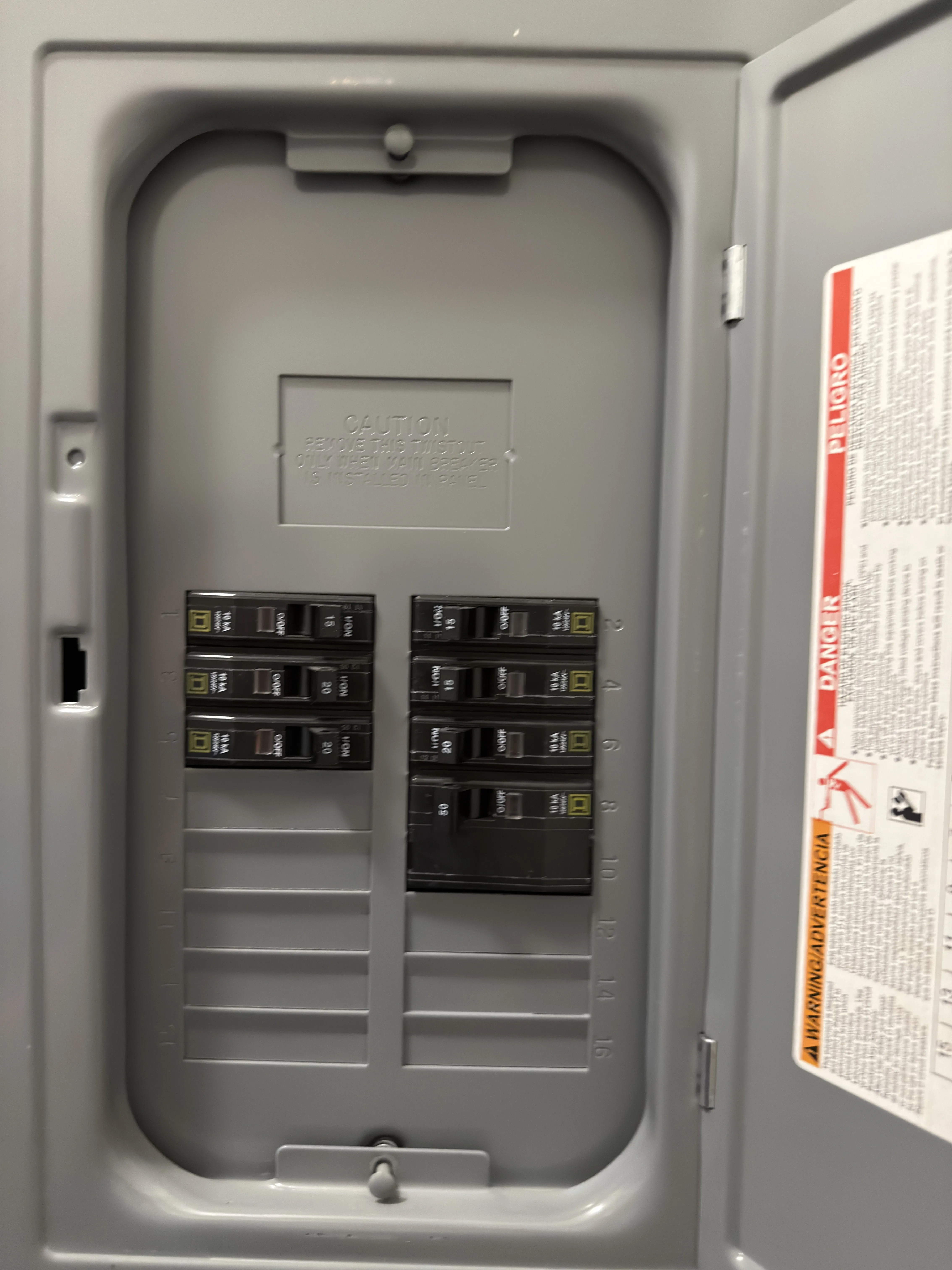
Service Panel – No Main Disconnect
More than 6 breakers. This panel doesn’t have a single main breaker to shut off all the power at once, which can be confusing and unsafe in an emergency, so a main disconnect should be installed.
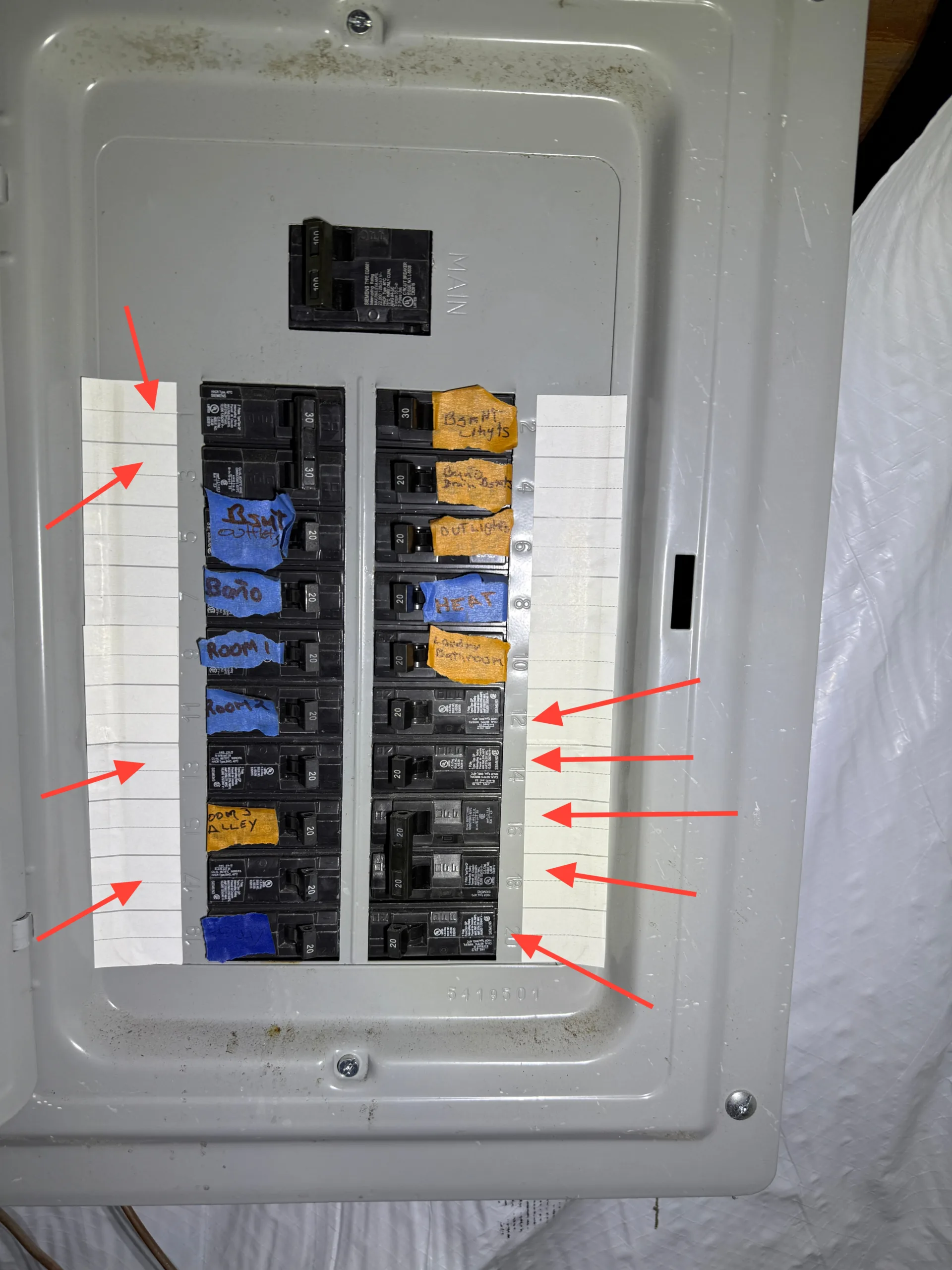
Service Panel – Circuits Not Labeled
Several breakers are unlabeled, making it unclear which areas of the home they control, so each circuit should be clearly and permanently labeled for safety and convenience.
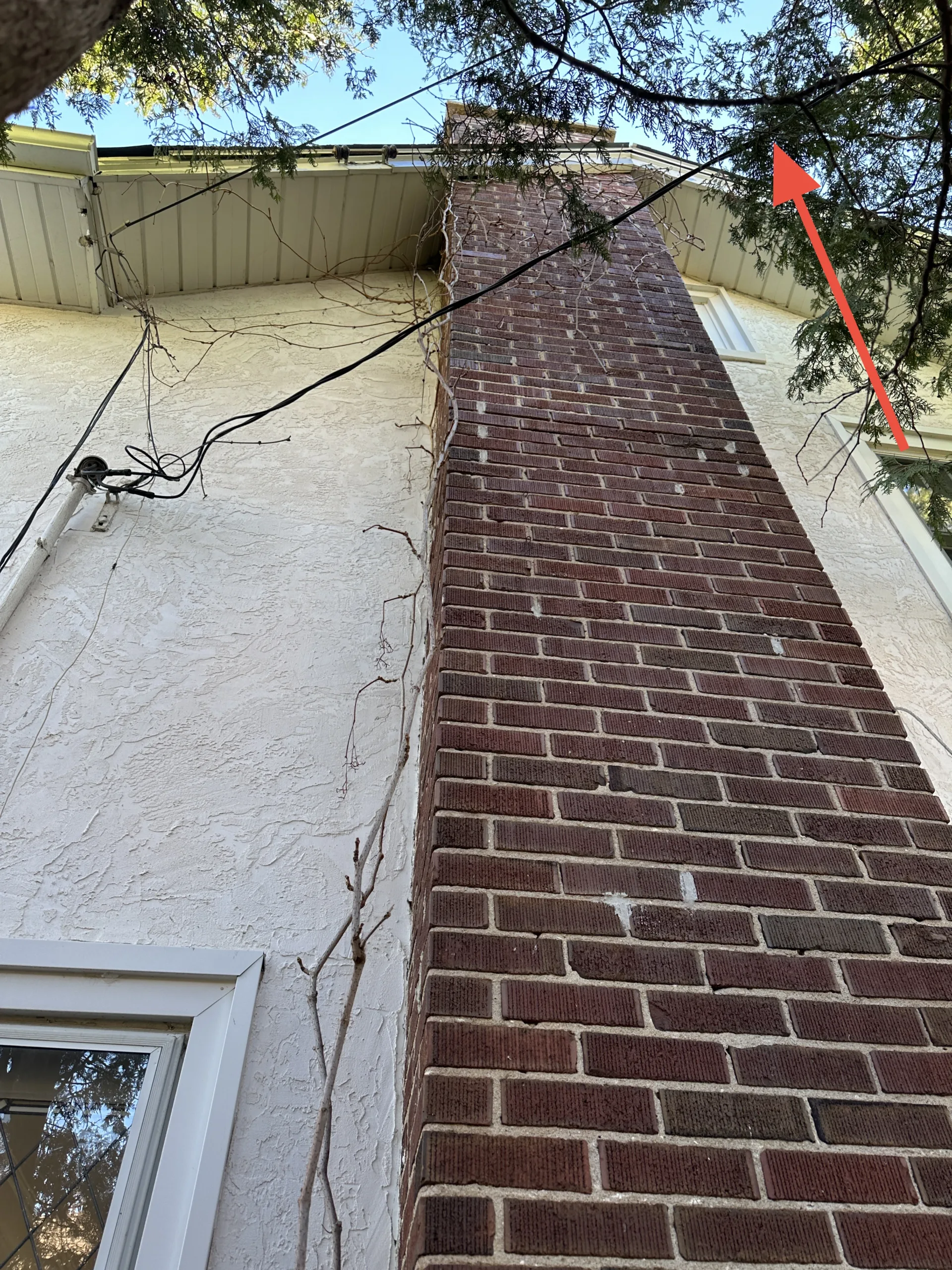
Service Drop – Tree Branches in Contact
Tree branches are touching the service wires where power enters the house, which can damage insulation and create hazards, so the branches should be trimmed back safely by a professional.
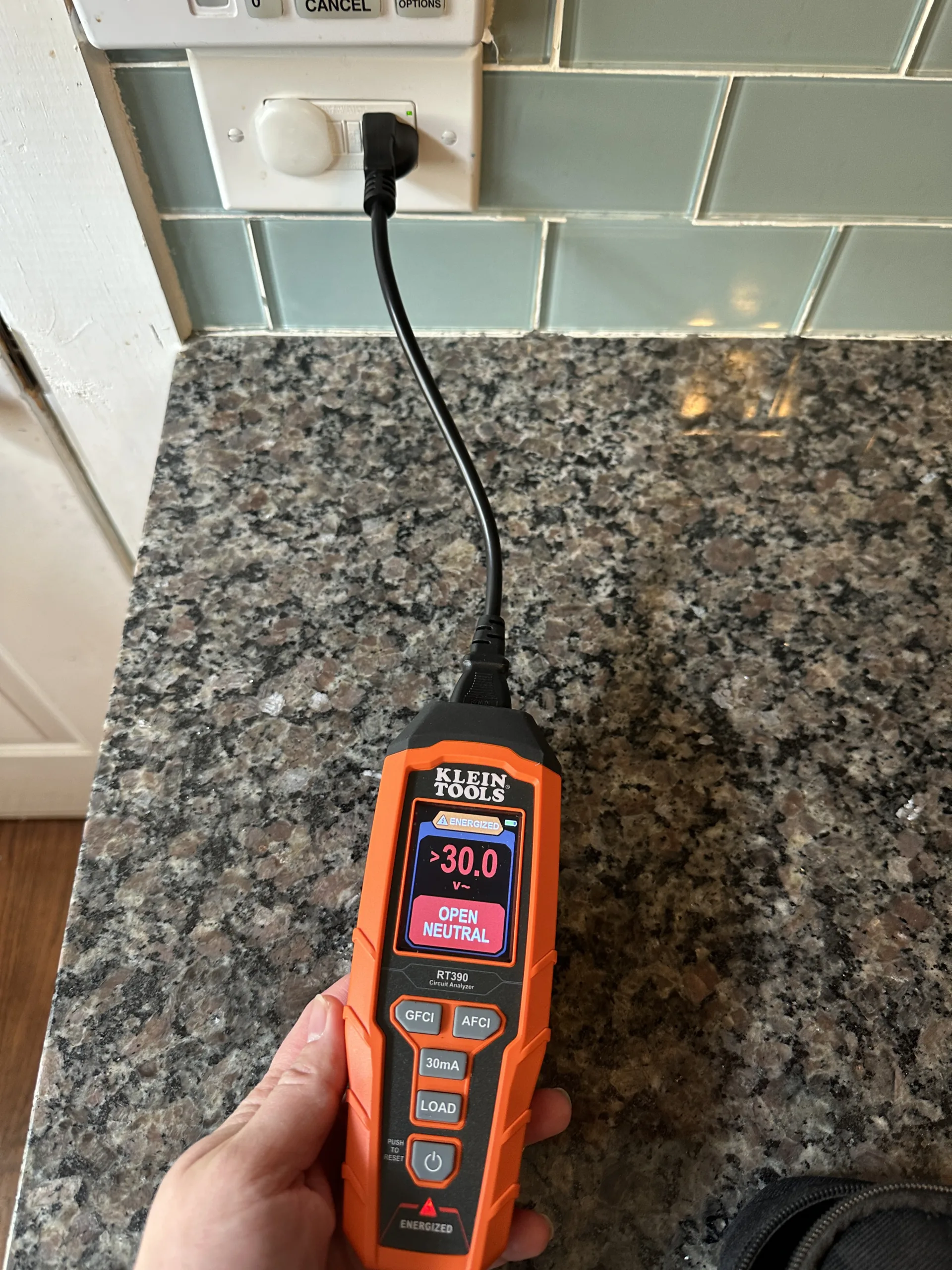
Receptacle – Open Neutral
This outlet tested with an “open neutral,” which means the neutral wire is not properly connected, so electricity cannot safely return to the panel. This can cause appliances not to work correctly and may create a shock hazard, so a licensed electrician should locate the loose or disconnected neutral and repair it.
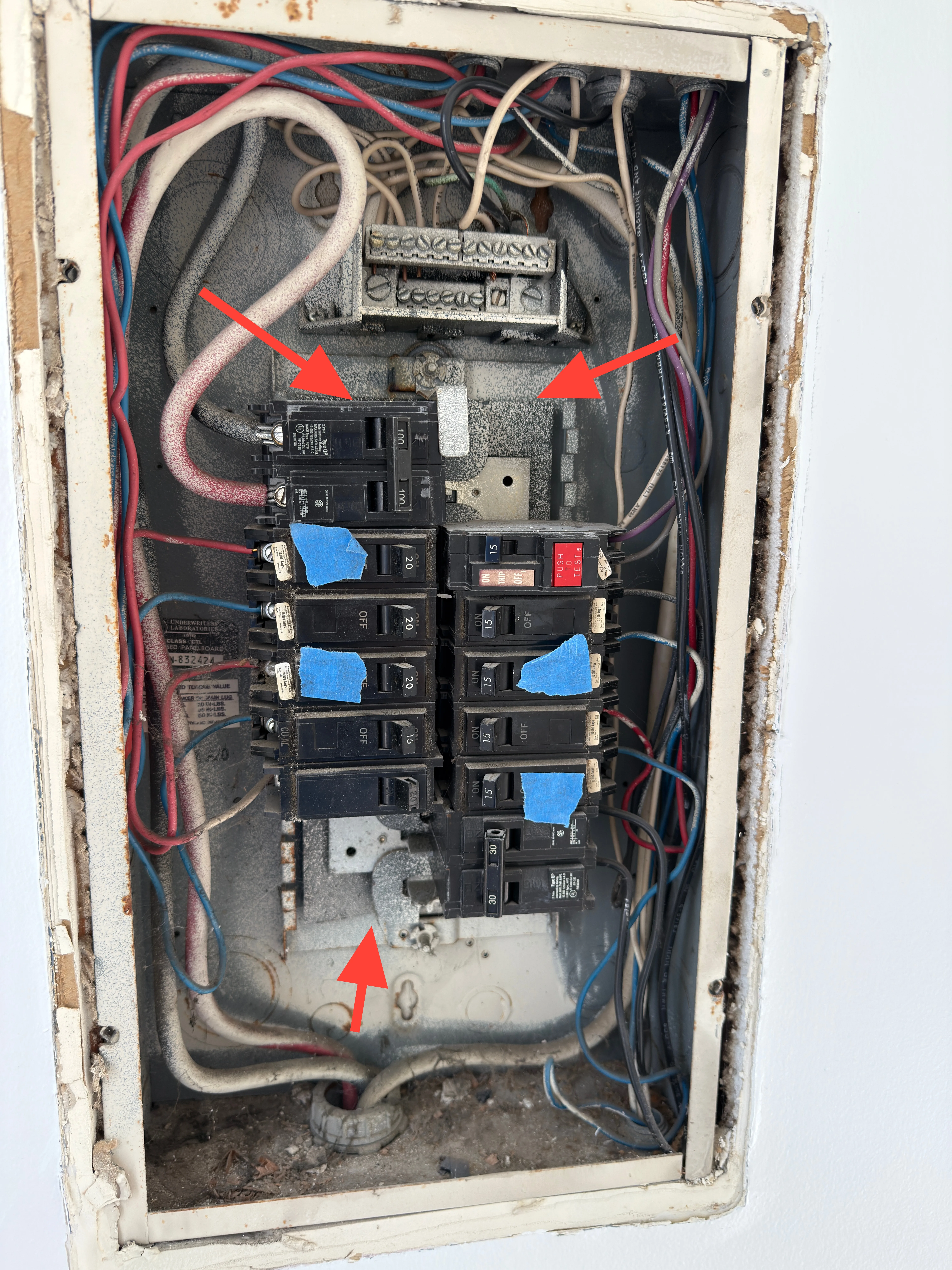
Service Panel – Paint Overspray Inside
Paint overspray is visible inside the electrical panel, which is not allowed because it can interfere with electrical parts or compromise their functionality, so the paint should be cleaned off or damaged components replaced.
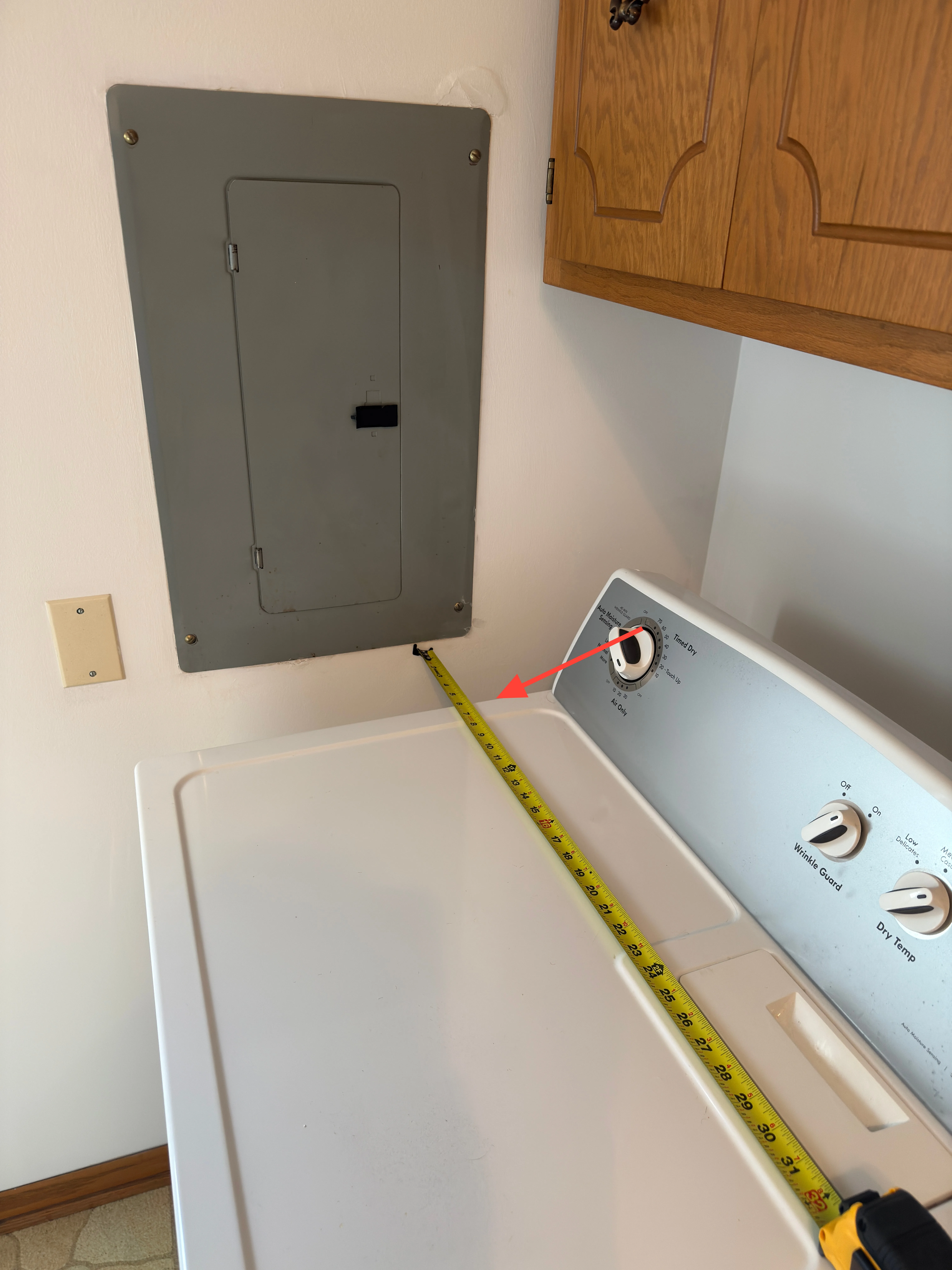
Service Panel – Blocked Working Clearance
The washer is blocking the electrical panel, leaving less than the 30 inches of clear working space required by code, so the appliance needs to be moved or the panel relocated to maintain proper clearance.
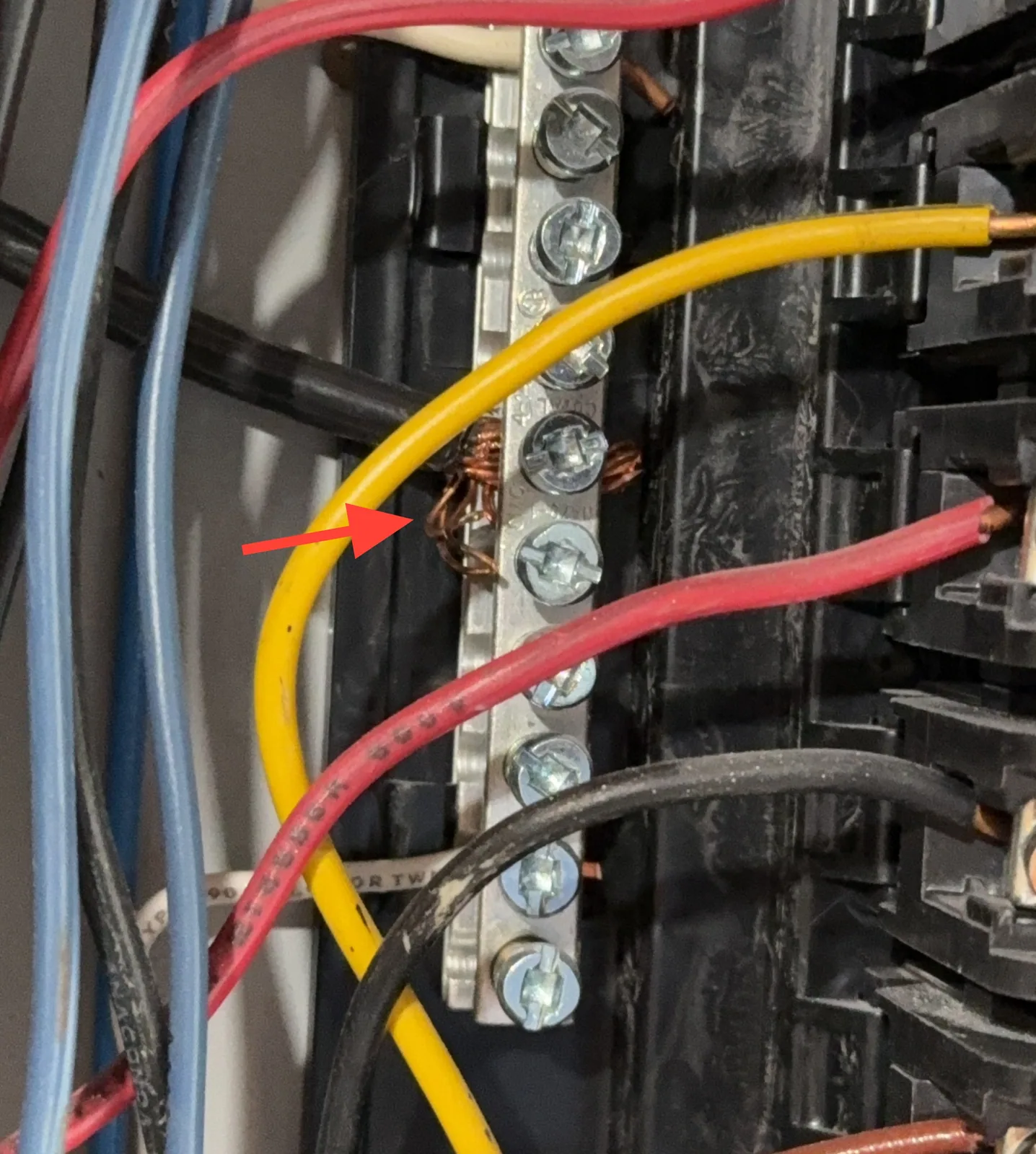
Service Panel – Loose and Frayed Conductor Strands
Stranded conductors at the panel were left untwisted, with loose and frayed strands at the terminations. Strands that are not gathered into the terminal make poor contact and can overheat, and stray strands can bridge to adjacent parts. A qualified electrician should redo the terminations.
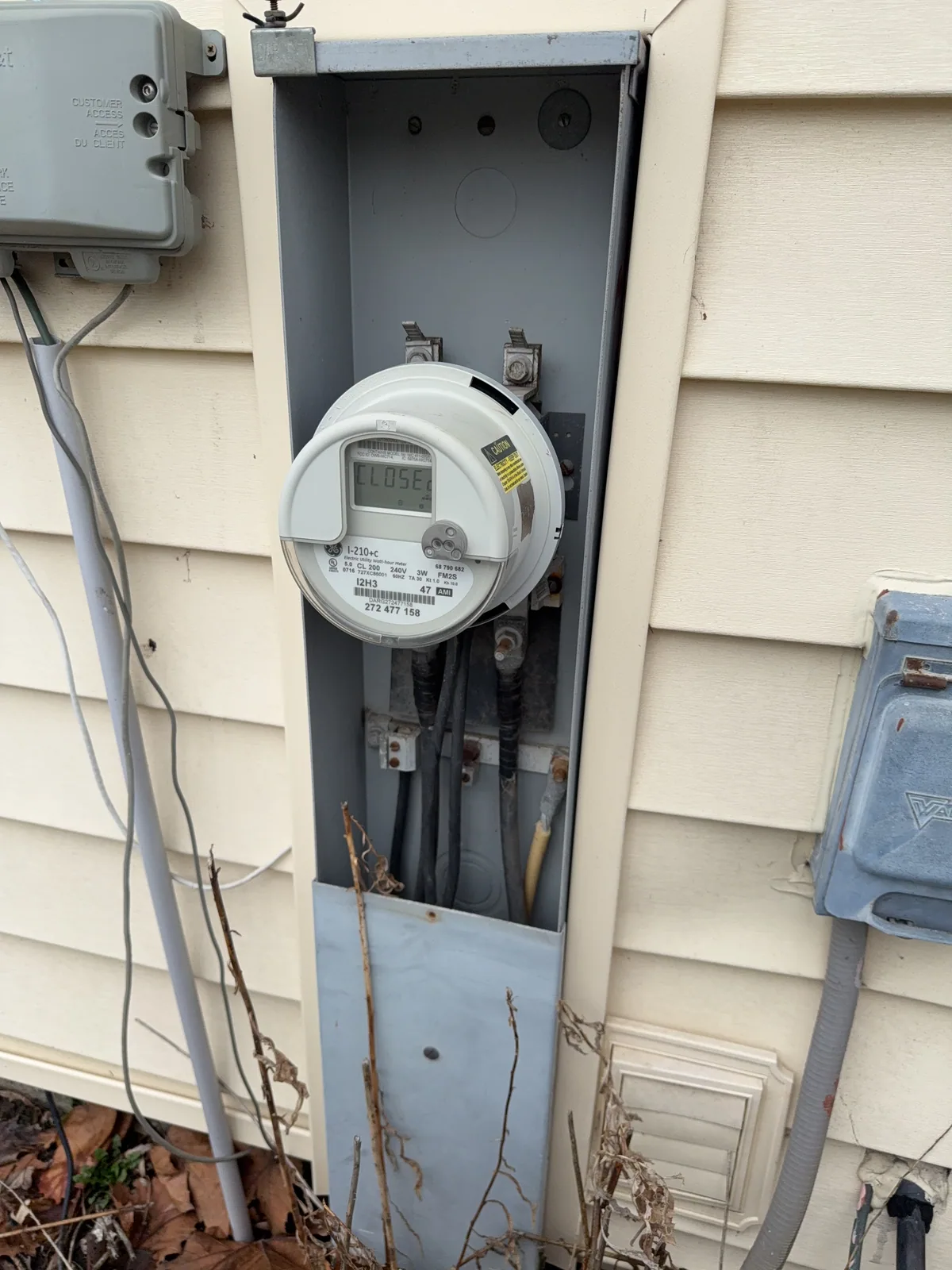
Electric Meter – Lower Enclosure Cover Missing
The electric meter enclosure is missing its lower cover, leaving components exposed. Open service equipment is a contact hazard and lets moisture and debris into the enclosure. The utility provider or a qualified electrician should fit the missing cover.
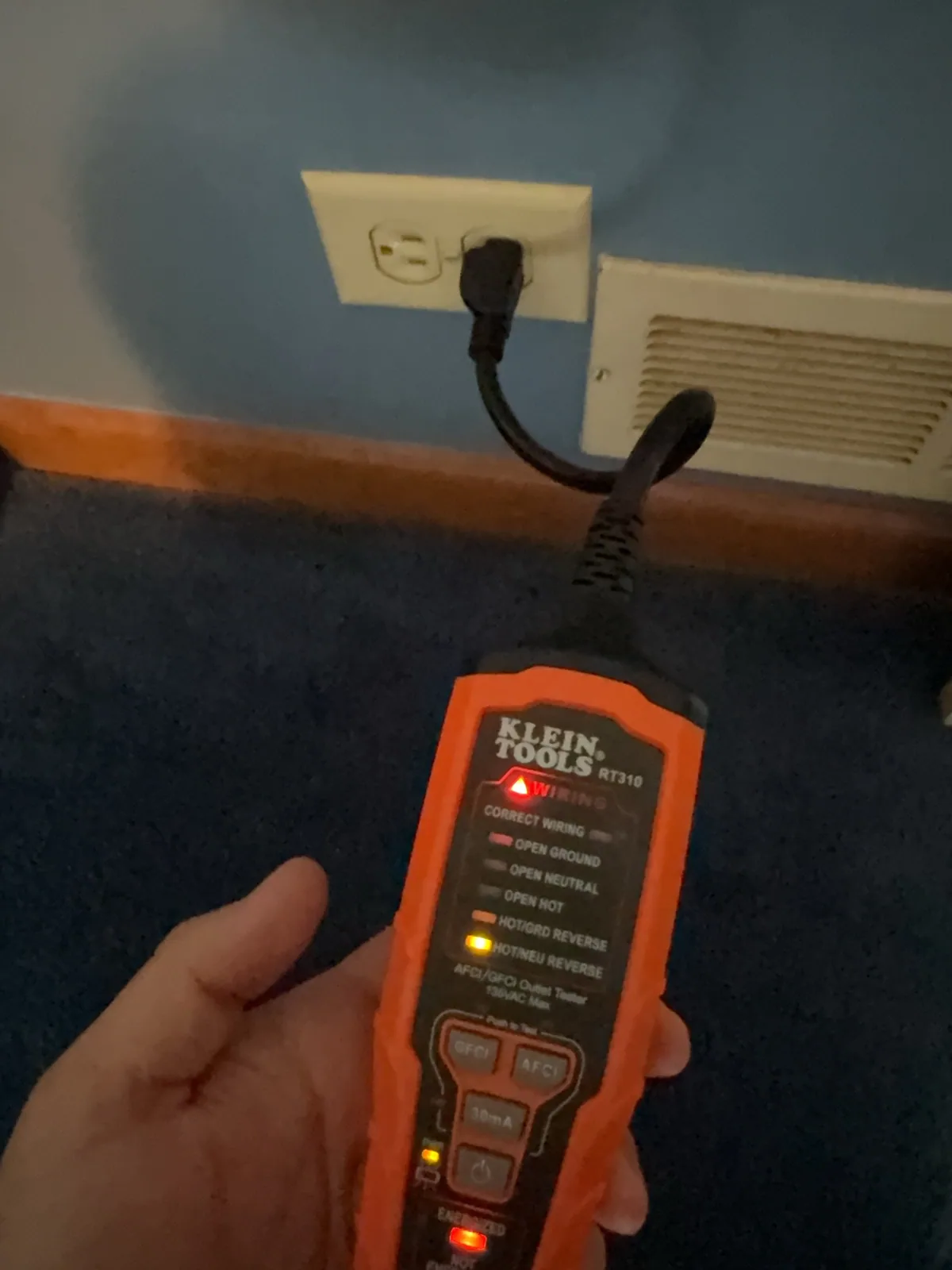
Receptacle – Improperly Wired
One or more receptacles were found to be improperly wired. Incorrect wiring at an outlet can put voltage where it is not expected and presents a shock hazard. A qualified electrician should correct this receptacle and check the others in the home.
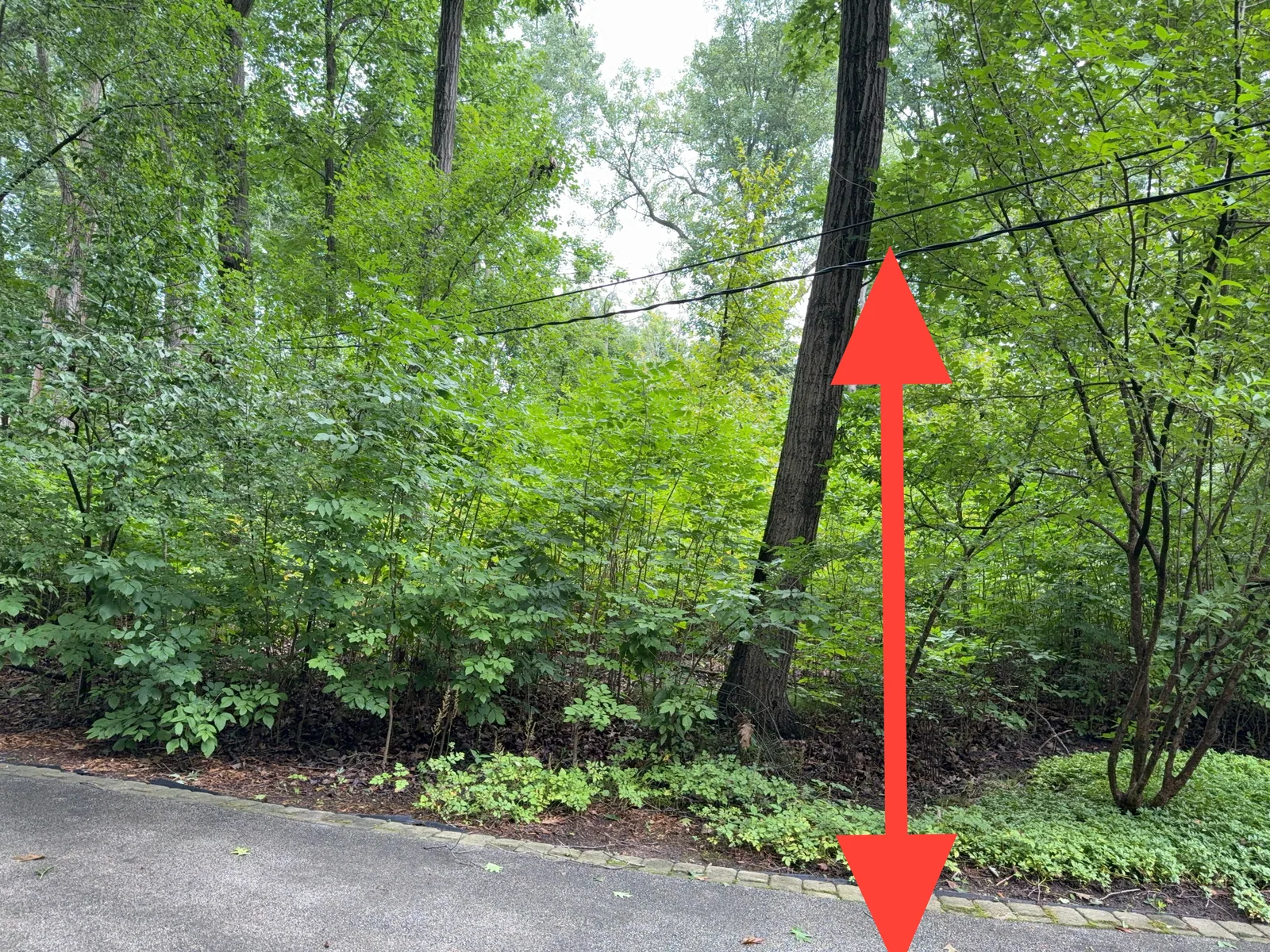
Service Conductors – Low Clearance Over the Driveway
The overhead service conductors crossing the driveway appear to sit below the required height above the driving surface, which is at least 12 feet for a driveway. Insufficient clearance allows contact from delivery trucks or equipment passing beneath and is a shock hazard. The utility provider should evaluate and correct the clearance.
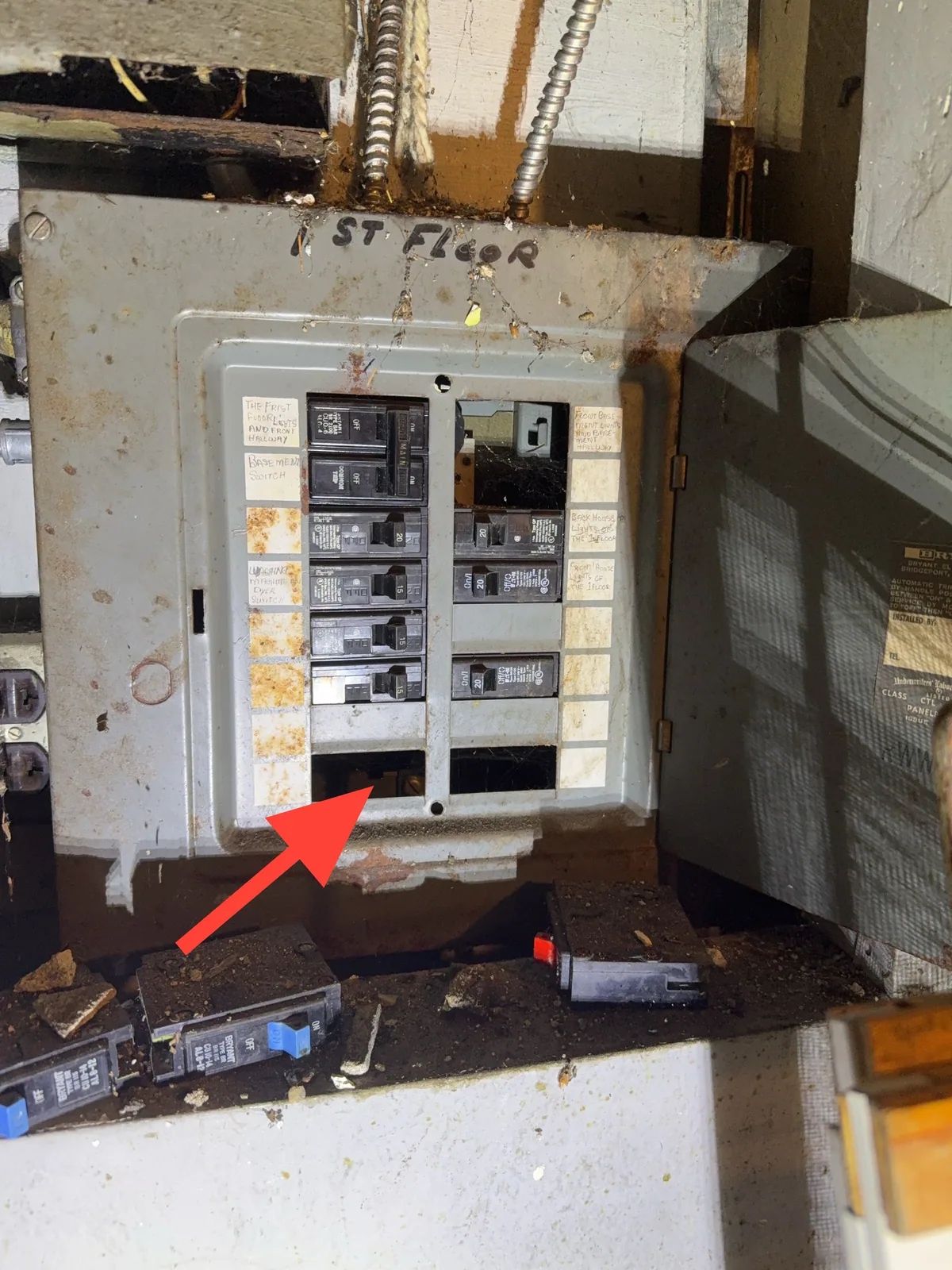
Service Panel – Open Knockouts and Gaps
Gaps, unfilled knockouts, and missing cover sections were observed at the panel. Any opening in a panel enclosure lets a person or an object reach energized components inside. A qualified electrical contractor should close the openings with proper fillers and cover plates.