
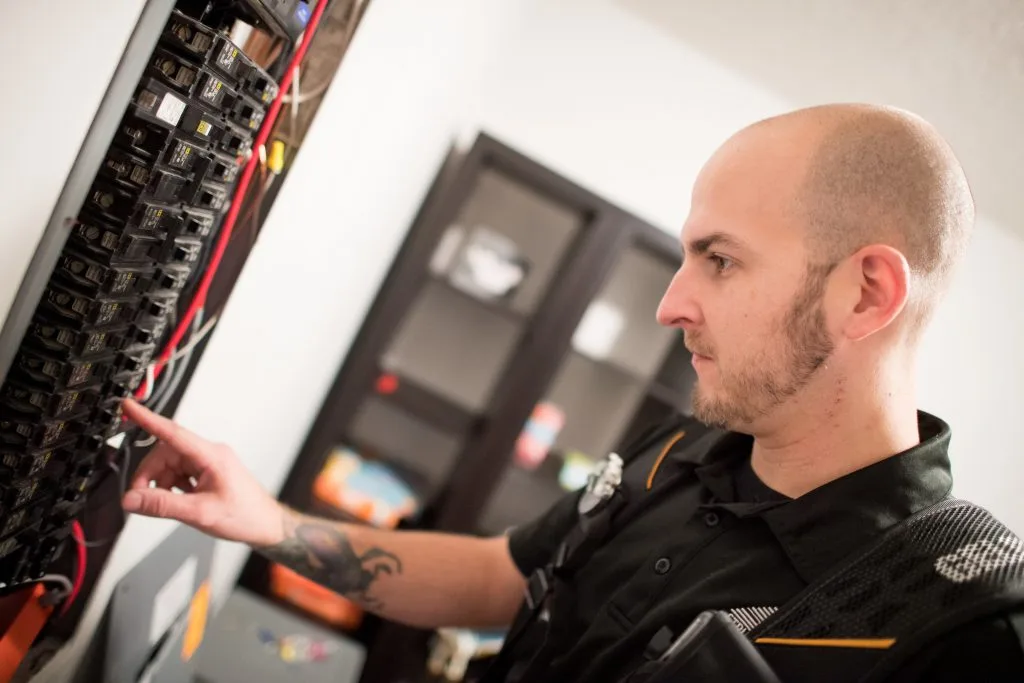
Chicago electrical inspection during a residential home inspection covers the visible service entrance, main panel, overcurrent protection, grounding, a sample of outlets and switches, GFCIs, and smoke and carbon monoxide detectors. It is a visual and functional safety check, not a code enforcement or permit inspection. We follow the InterNACHI Standards of Practice, which means we assess and document what we can safely see and test, then defer anything invasive or hazardous to a licensed electrician.
Table of Contents
- What We Check During a Chicago Electrical Inspection
- What Inspectors Won’t Touch and When We Defer
- Common Chicago-Area Electrical Defects and Why They Matter
- How Electrical Findings Show Up in Your Report and Negotiations
- When to Call an Electrician Now vs. Later
- Our Take on Electrical Inspections in Chicagoland
- Ready to Book Your Chicago Electrical Inspection?
- Sources
What We Check During a Chicago Electrical Inspection
A home’s electrical system tells a story about its age, its renovations, and how well it has held up against Chicago winters. Here is what we actually put our eyes and testers on during a standard inspection.
- Service drop, mast, and meter: we check the exterior connection point and meter enclosure for damage, corrosion, or improper clearance.
- Main disconnect and panelboard: we look inside the panel for overheating signs, moisture intrusion, rust, and whether circuits are labeled.
- Overcurrent protection: breakers and fuses get a visual review for correct sizing, double-tapped circuits, and obvious damage.
- Grounding and bonding: we verify a visible grounding conductor and bonding at the water line and panel where accessible.
- Outlets, switches, and fixtures: a representative sample gets checked for polarity, loose connections, and physical condition.
- GFCI receptacles and breakers: we test these with a dedicated GFCI tester wherever they are installed and accessible.
- Smoke and carbon monoxide alarms: we confirm presence and basic function in the required locations.
The InterNACHI Standards of Practice require this kind of visual assessment across the service entrance, panelboards, grounding and bonding, and a representative sampling of devices, along with GFCI testing wherever it is possible. That sampling approach matters. We are not opening every outlet in a graystone on Lincoln Park’s tree-lined blocks. We are testing enough of them to give you a reliable read on the system’s overall condition.
Pro Tip: Flip on every light switch and test a few outlets with a lamp before we arrive. If something is already acting strange, tell us. It helps us focus testing time where it counts.
What Inspectors Won’t Touch and When We Defer
Home inspectors are not electricians, and the rules governing our work reflect that distinction on purpose. The InterNACHI electrical inspection course is explicit about the boundaries:
- We do not remove the dead front (the panel’s inner cover) to expose live components.
- We do not insert probes or meters into an energized panel.
- We do not measure main service amperage or voltage as a routine matter.
- We do not operate electrical disconnects that appear to be off for a reason.
We rely on non-contact voltage testers, and in some cases infrared cameras, to spot hot connections without touching anything live. That’s a meaningful safety buffer, not a corner cut. When a panel shows scorch marks, buzzing, moisture, rust, or exposed hot conductors, we stop and document rather than push further. The course guidance on this point is blunt: prioritize safety, defer when the inspector or occupant is at risk, and hand the item to a licensed electrician. When we defer, the report states exactly what we saw, why we stopped, and what kind of professional evaluation comes next.
Common Chicago-Area Electrical Defects and Why They Matter
The electrical problems we see most often trace back to the age and layout of Chicago’s housing stock. A few patterns show up again and again.
- Overloaded circuits in vintage two-flats. Older Logan Square and Humboldt Park two-flats were often wired for a fraction of today’s appliance load, so circuits get pushed past their design.
- Cloth insulation and knob-and-tube remnants. Buildings built before mid-century sometimes still carry partial knob-and-tube wiring behind walls, invisible until a renovation opens things up.
- Risky panel modifications. Double-tapped breakers and mismatched or unlabeled panels show up frequently where a previous owner did their own upgrade.
- Hidden DIY junctions and moisture corrosion. Basements across Chicago deal with seasonal moisture, and freeze-thaw cycles accelerate corrosion on anything wired near a damp foundation wall.
We have documented hidden defects in roughly four out of ten two-flat inspections we performed in Chicago, which underscores how common these issues are in the city’s multi-unit vintage housing. For a deeper look at what these problems look like in practice, our guide on electrical red flags in older Chicago homes walks through real examples. None of this means every bungalow on the Northwest Side has a hidden hazard. It means older Chicago housing carries a specific set of electrical risks worth checking carefully.
How Electrical Findings Show Up in Your Report and Negotiations
Every electrical item we flag gets the same treatment in the report: a description of the condition, a photo, a severity note, and a recommended next step. If something needs professional evaluation, we say so directly and point toward that referral rather than leaving it vague.
- Description and photo: each defect is written in plain language and paired with an image so you can see exactly what we saw.
- Severity and recommendation: minor cosmetic issues get flagged differently than safety hazards that need immediate attention.
- Referral when needed: anything beyond our scope, like suspected knob-and-tube behind drywall, gets a clear recommendation to bring in a licensed electrician.
Buyers use these findings as leverage. A documented safety defect, like an outdated panel or missing GFCI protection in a kitchen, can support a request for repairs, a credit at closing, or a contingency written into the contract. For the specifics of that process in Illinois, our guide on inspection repair negotiations breaks down what buyers can reasonably ask for. Costs vary too widely to quote a number that means anything here. Get at least one electrician bid on any major panel or rewiring item before you decide how to handle it in negotiation.
When to Call an Electrician Now vs. Later
Some electrical findings mean stop what you’re doing. Others mean schedule it for next month.
- Call immediately if you see arcing, smell burning near an outlet or panel, notice sparking inside the panel, or spot exposed live wires anywhere in the home.
- Schedule soon, not urgently, for an outdated panel, missing AFCI or GFCI protection where it’s now recommended, or partial rewiring in an older unit.
- Take these steps right now if you notice a warning sign: keep everyone away from a panel showing arcing, never touch a suspicious outlet, switch off the labeled circuit if you can do it safely, and photograph the condition before calling for help.
Fire risk from electrical faults is a real concern in older housing stock, and our partner resource on fire code violations to avoid covers related hazards worth knowing about if you own an older property.
Our Take on Electrical Inspections in Chicagoland
We’re licensed and insured, InterNACHI certified, and BBB accredited, and we work across Lake, McHenry, DuPage, and northern Cook Counties. Our electrical inspection photo documentation exists because buyers and sellers deserve to see the defect, not just read a description of it. Our two-flat findings across Chicago back that up.
We’re not code inspectors, and we don’t pretend otherwise. Our job is to hand you an honest diagnostic picture and, when something’s beyond a visual check, point you to a licensed electrician who can go further.
Ready to Book Your Chicago Electrical Inspection?
Chicago Home Inspect LLC gives you a documented, photo-backed look at your home’s electrical condition, whether you need a full residential inspection or want to add electrical-focused documentation to your report. We work weekends, which matters when you’re on a tight closing timeline and can’t wait until Monday for access to the property. Every inspection includes clear photo evidence of what we found, plus a straightforward referral to a licensed electrician if something needs work beyond our scope. Homebuyers and sellers across Lake, McHenry, DuPage, and northern Cook Counties use our electrical home inspection photos service to get documentation they can actually use in negotiations. Ready to get on the schedule? Book your inspection and ask about adding electrical photo documentation to your report.
Sources
- Standards of Practice for Performing a General Home Inspection | InterNACHI
- How to Perform Residential Electrical Inspections (InterNACHI course PDF)