

Whether you’re a new homeowner or a longtime DIYer, few things are more frustrating than plugging something in—only to find the outlet completely dead. Before you call an electrician, it helps to understand some of the most common reasons outlets stop working and what you can safely check yourself.
This guide is especially helpful for Chicago-area homeowners dealing with older homes, where quirky wiring isn’t unusual. As a licensed home inspector in Chicago, I’ve seen all kinds of electrical issues—many of which could’ve been solved (or avoided) with a bit of know-how.
1. First, Check the Obvious: Is the Breaker Tripped?
It might sound basic, but it happens more often than you’d think.
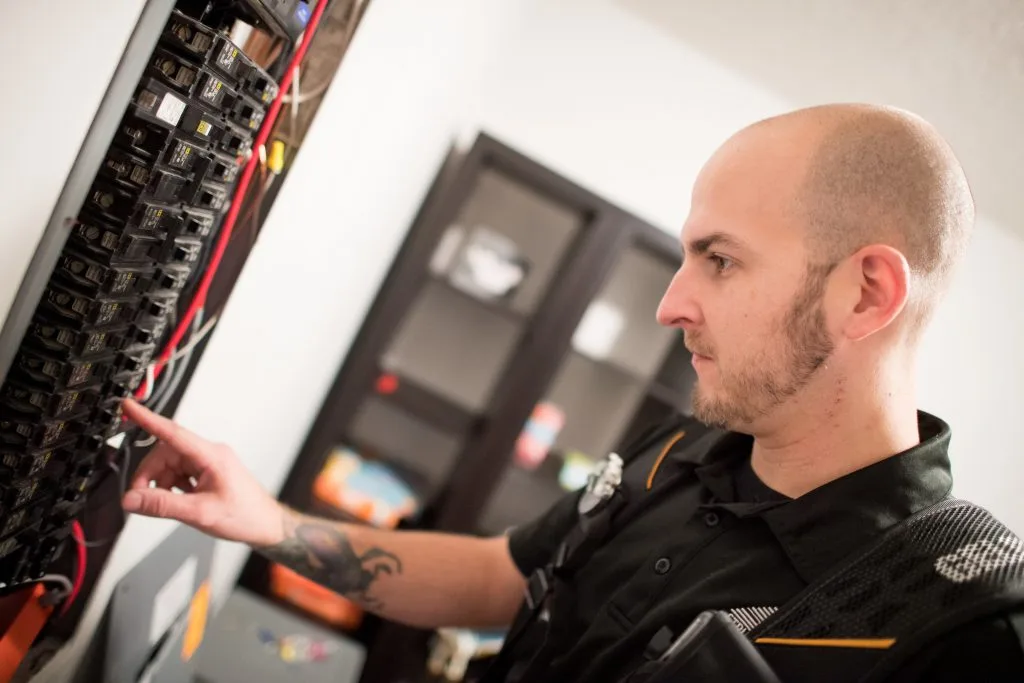
Head to your electrical panel and look for any breakers that are flipped to the middle position. A tripped breaker may not always be fully in the “off” position—it might just be slightly out of alignment.
To reset:
- Flip the breaker fully OFF
- Then turn it back ON
Why it happens: Overloaded circuits (like too many kitchen appliances at once), short circuits, or aging wiring.
2. Is It a GFCI Outlet? That Might Be the Culprit
If your outlet is in a bathroom, kitchen, laundry room, garage, or basement, it’s likely protected by a GFCI (Ground Fault Circuit Interrupter).
Even if the dead outlet isn’t a GFCI itself, it might be wired downstream from one that has tripped elsewhere.
What to do:
- Find all the GFCI outlets in your home. Press the “RESET” button on each one.
- Check the dead outlet again after resetting each GFCI.
Tip: Many Chicago homes have older GFCIs installed in only one location—like the bathroom—that may control multiple outlets in other rooms.
3. Are There Loose Wires Behind the Outlet?
If your outlet suddenly stopped working and it’s not the breaker or GFCI, the issue might be behind the wall.
Common signs of a loose wire:
- Intermittent power
- Warm or discolored outlet faceplate
- Crackling noise when you plug something in
⚠️ DIY warning: If you’re not confident working with electricity, don’t remove the outlet cover. This is often a good point to bring in a licensed electrician or schedule a home inspection to identify faulty wiring.
4. Is the Outlet Itself Just Worn Out?
Outlets don’t last forever—especially in older homes. If the outlet is cracked, won’t grip plugs properly, or is visibly burnt, it’s time to replace it.
Old outlets can become a fire hazard, especially if they spark or feel hot to the touch.
5. Could It Be a Half-Hot or Switched Outlet?
Some outlets are intentionally wired to only provide power when a switch is turned on. These are common in rooms without overhead lights.
How to tell:
- Plug a lamp into both outlets.
- Flip nearby switches to see if either plug is controlled.
This is often overlooked, especially by first-time buyers or renters unfamiliar with the home’s layout.
6. What if Multiple Outlets Aren’t Working?
If you notice that a group of outlets in one area of the home has gone dead, and it’s not tied to a GFCI or tripped breaker, it may be a sign of:
- A faulty wire connection (especially if push-in wiring was used)
- An overloaded circuit
- A larger electrical issue behind the walls
In this case, it’s smart to schedule a professional evaluation. A home inspection in Chicago can uncover whether the problem is localized or part of a more widespread wiring concern—especially common in homes built before the 1970s.
7. Can a Power Surge Damage Outlets?
Yes—especially during storms or if large appliances cycle on and off suddenly. While a surge usually affects electronics first, it can also damage wiring or cause breakers and GFCIs to fail.
Consider installing whole-house surge protection or dedicated surge protectors on major appliances.
Quick DIY Troubleshooting Checklist
✅ Check your breaker panel
✅ Reset all GFCI outlets
✅ Look for other affected outlets in the same area
✅ Test with a different appliance
✅ Listen or feel for buzzing, crackling, or warmth
✅ Don’t ignore scorch marks or discoloration
When Should You Call a Professional?
If any of these apply, skip the DIY and get it looked at ASAP:
- You smell burning or see scorch marks
- The breaker keeps tripping repeatedly
- Lights dim when you plug in appliances
- You hear buzzing or crackling
- The home has cloth wiring or aluminum wiring (common in some older Chicago properties)
An inspection might reveal the need for panel upgrades, rewiring, or grounded outlet replacements—especially in pre-1960s homes.
Final Thoughts
It’s tempting to ignore a non-working outlet and just plug your devices somewhere else. But outlets are part of a larger electrical system—and sometimes a small symptom points to a bigger issue. Knowing when to DIY and when to call in a pro can protect your home, your wallet, and your safety.
If you’re unsure or just want peace of mind, we offer licensed home inspections in Chicago that include a detailed look at your electrical system, with same-day reports and clear recommendations.
Think there’s more going on behind your walls?
Book a home inspection with Chicago Home Inspect and get a full breakdown of your home’s electrical safety and condition.